

I’M TOM VIERUS - A CONSERVATION PHOTOGRAPHER, FILMMAKER AND MARINE BIOLOGIST BASED IN FIJI.
I’M TOM VIERUS - A CONSERVATION PHOTOGRAPHER, FILMMAKER AND MARINE BIOLOGIST BASED IN FIJI.
I work across the Pacific, using photography and film to document science, wildlife, communities and environmental change.
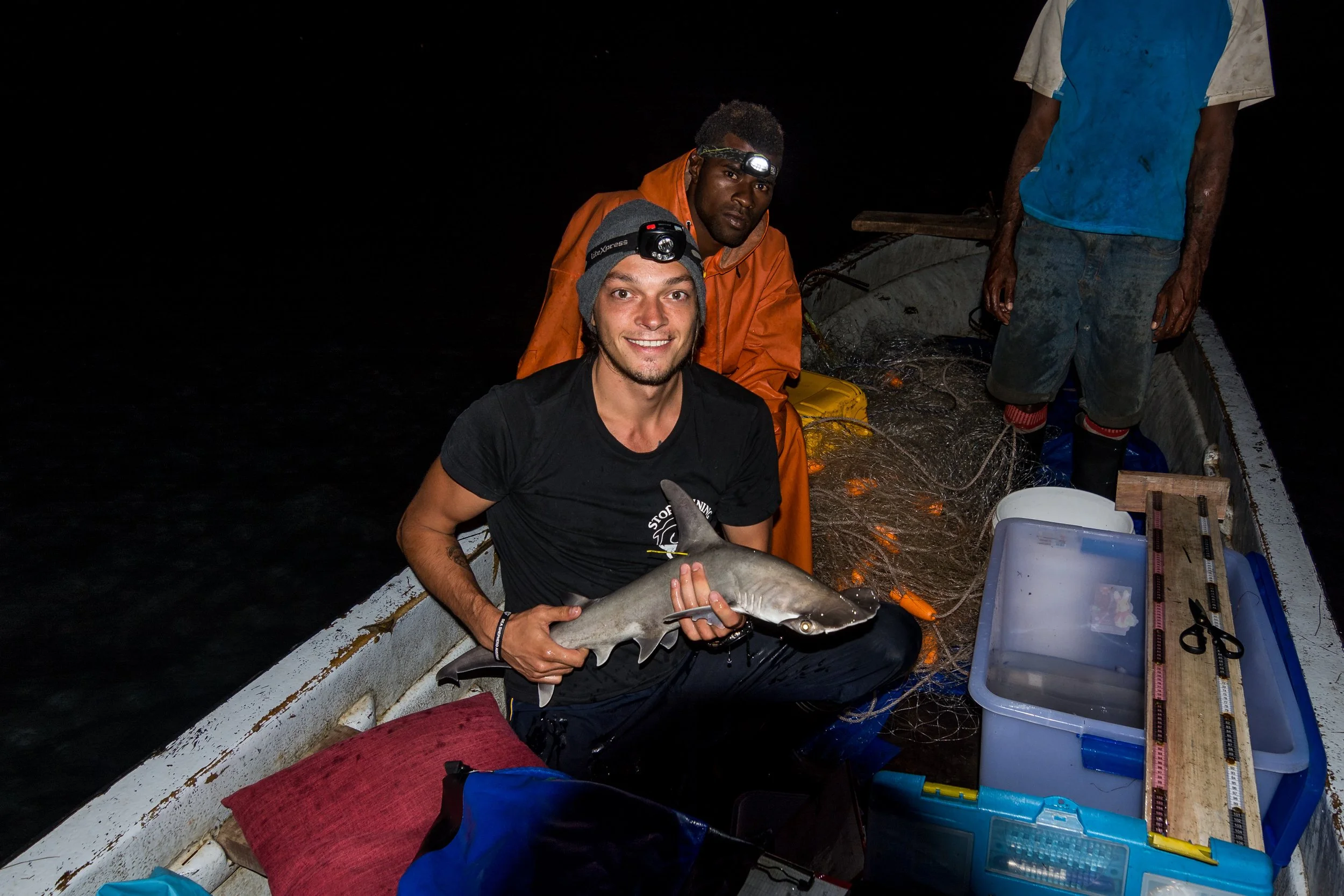
Conducting shark research in Ba, Fiji. I am holding a great hammerhead shark (Sphyrna mokarran) shortly before releasing it back into the ocean (2016).
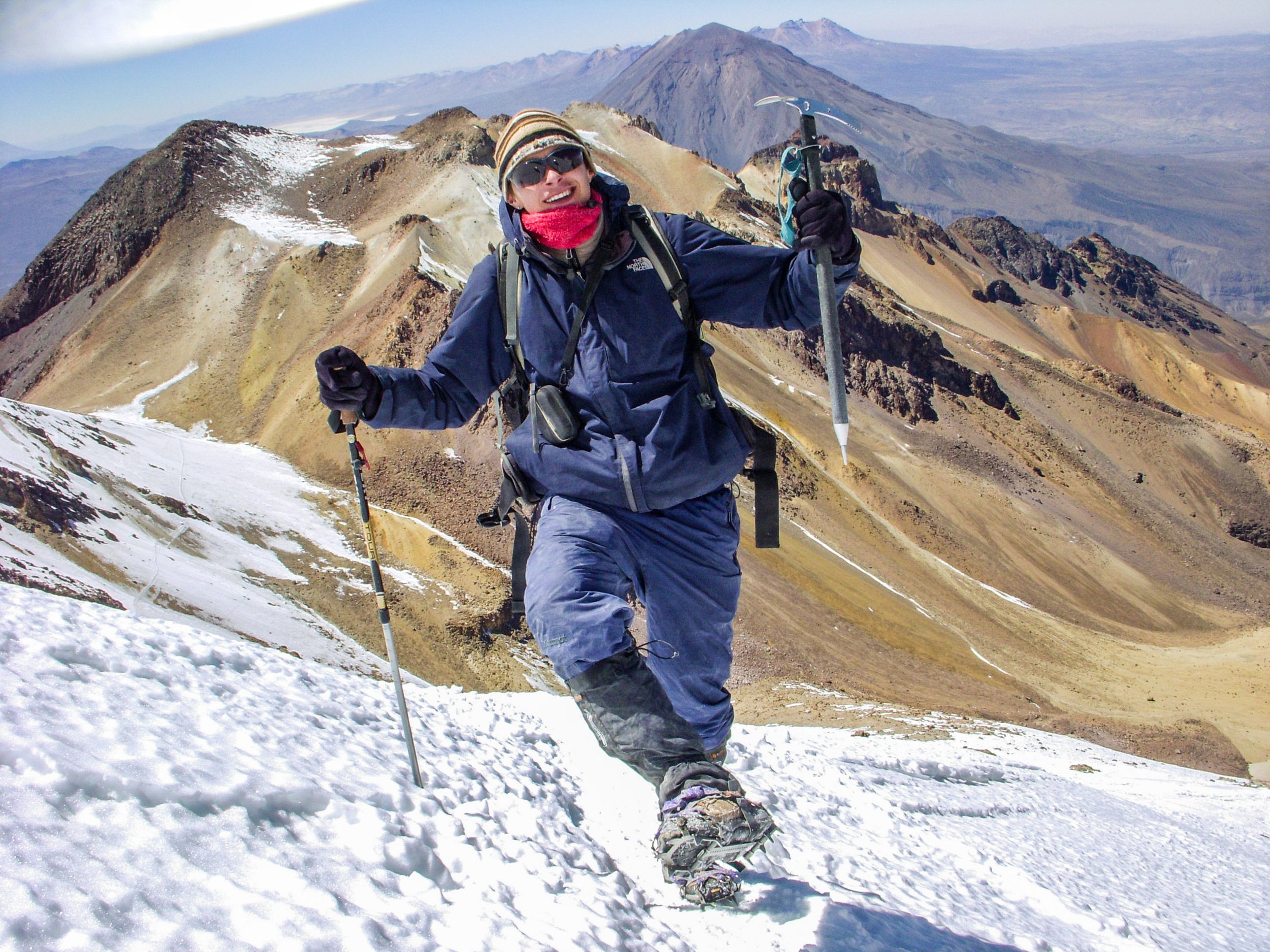
I got my first camera when I was 15, shortly before leaving Germany to spend a year and a half as an exchange student in South Africa. It was a four-megapixel Sony point-and-shoot, and I carried it everywhere. At first, I simply wanted to show my friends and family what life there looked like. I photographed whatever caught my attention, without thinking that it might one day become my work.
When I returned to Germany, I studied biology. I later spent almost a year on Egypt’s Sinai Peninsula, where I developed my diving skills and became increasingly interested in tropical marine ecosystems. That led me to the ISATEC Master’s programme in Tropical Marine Ecology and, in 2015, to Fiji, where I spent several months researching shark ecology for my master’s thesis.
FROM A FIRST CAMERA TO FIJI
I continued photographing throughout those years. The shark images I made during my research later received the German Prize for Science Photography. The award opened my first professional doors and helped me see that a career in photography might be possible. At the same time, I had to decide whether to remain in academia and pursue a PhD or take the considerably less certain route of trying to make photography and filmmaking my profession.
One thing strongly influenced that decision. The scientific paper that came out of my shark research attracted relatively little attention beyond academic circles, while my photographs and videos reached a very different audience. They led to invitations to public events and radio programmes, and even to a few small television segments. Again and again, I was asked not only to show sharks, but to explain why they mattered and why they needed protection.
That contrast stayed with me. There was no shortage of scientific knowledge, but much of it never reached people outside academia. I began to think that I could contribute more to conservation by helping scientists and organisations communicate their work through photography and film. After several months of deliberation, I decided not to pursue a PhD and instead focused on building a career in visual storytelling and science communication. I first worked independently in Germany before returning to Fiji in 2018 to pursue photography and filmmaking full-time.
CHOOSING VISUAL STORYTELLING
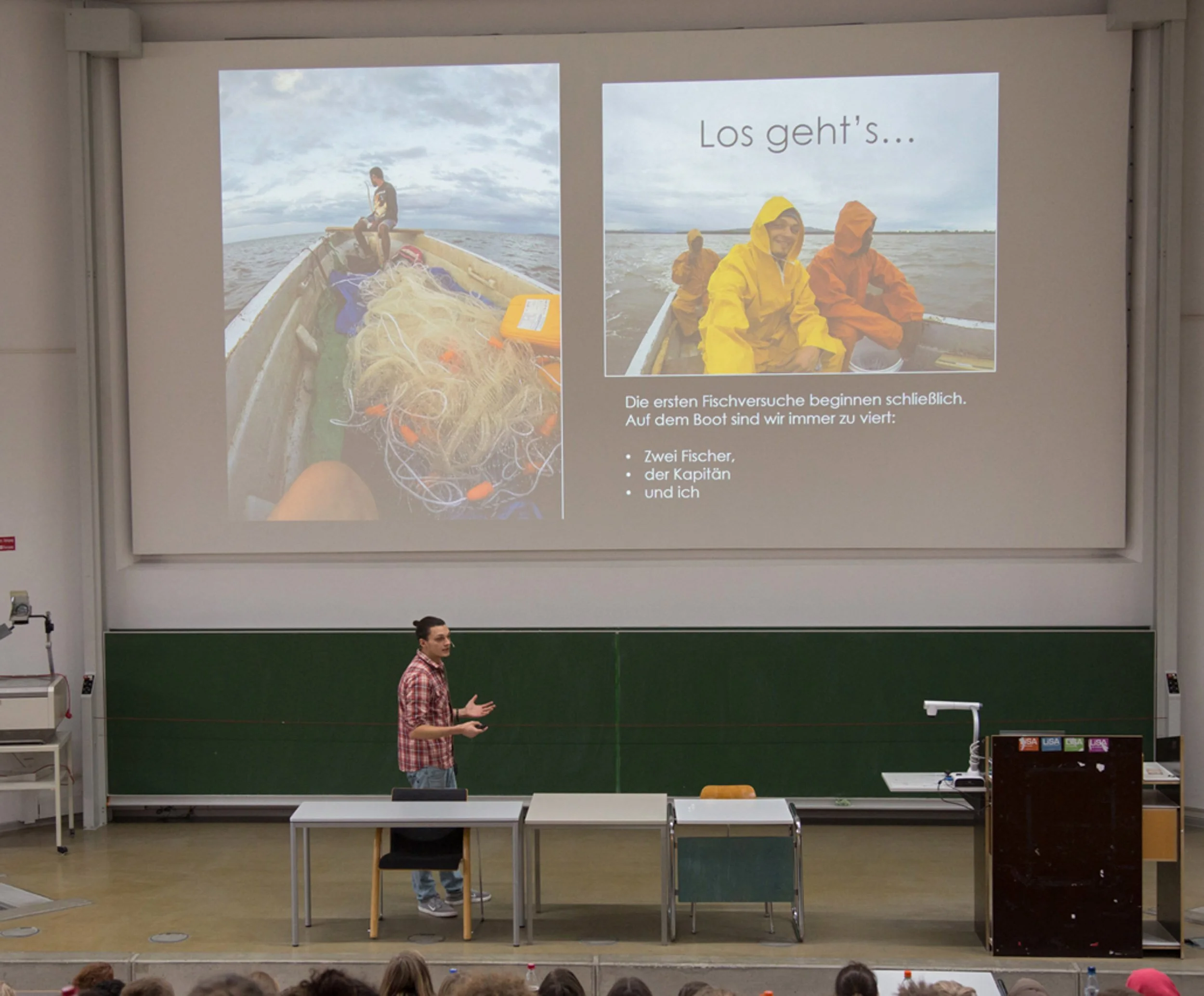
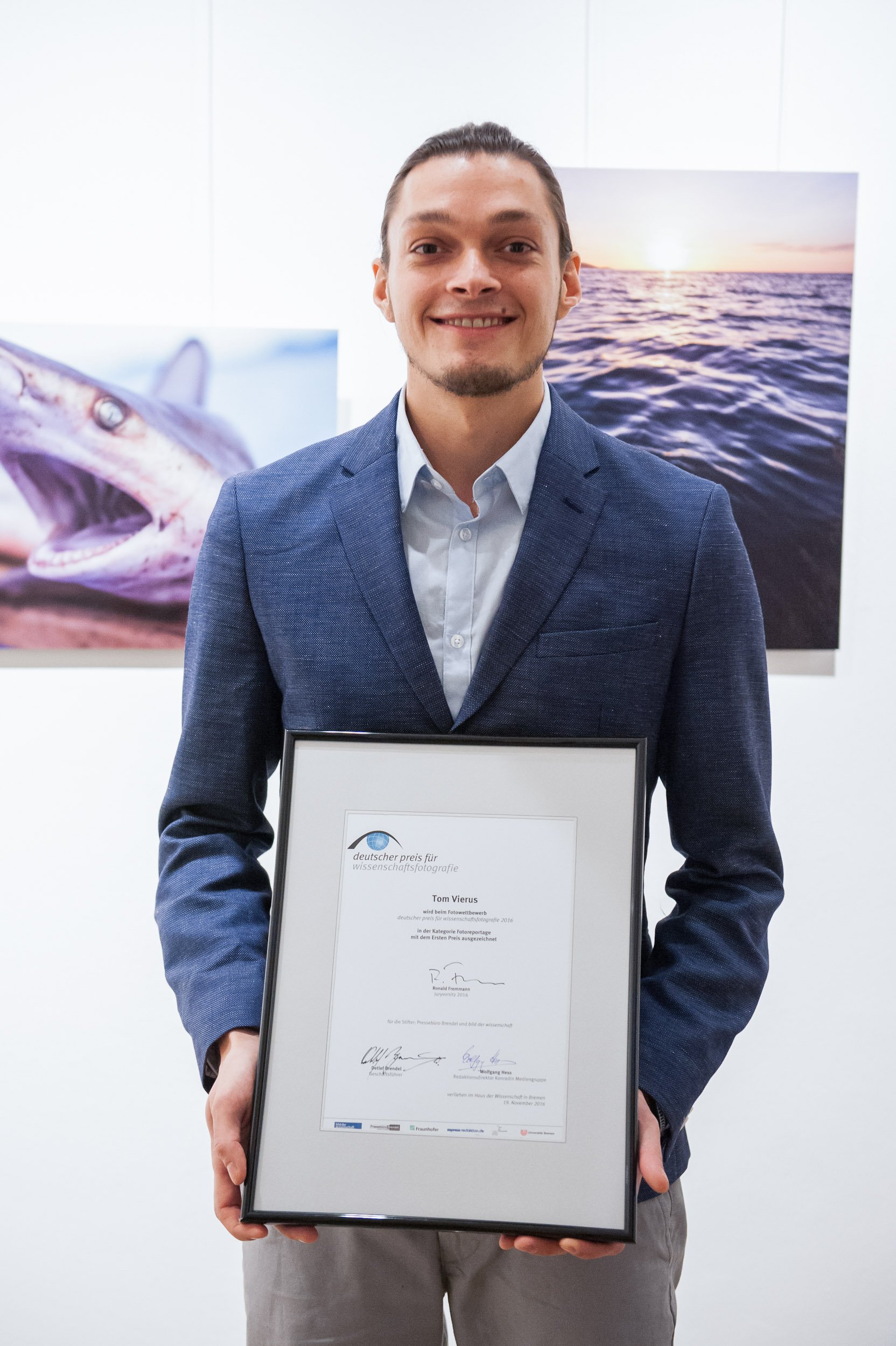
Top: During a public talk on my shark research in Fiji. Right: Winning the German Prize for Science Photography (2016).
SCIENCE & RESEARCH
Although I chose not to remain in academia full-time, science has continued to be part of my work. Since publishing the results of my master’s research on juvenile sharks in Fiji’s Ba Estuary, I have contributed to further research as an independent scientist. My publications and technical reports cover sharks, rays and birds in Fiji and Papua New Guinea, including shark nursery habitats, oceanic manta rays, ray diversity and reproductive biology, and the identification of Important Shark and Ray Areas.
Over time, photography itself has also contributed to the scientific record. In Papua New Guinea, my photograph of the New Britain Goshawk became the basis of a short paper confirming the species’ presence after 55 years without a scientifically documented sighting. In Fiji, repeated observations and photographs of an unusual shining-parrot led to another short note examining possible hybridisation between red and masked shining-parrots.
Research is no longer my full-time profession, but it continues to influence the way I work. It helps me understand what I am documenting, ask better questions in the field and communicate complex subjects accurately. Whenever possible, I continue to collaborate with researchers and contribute observations, photographs and field experience to scientific work.
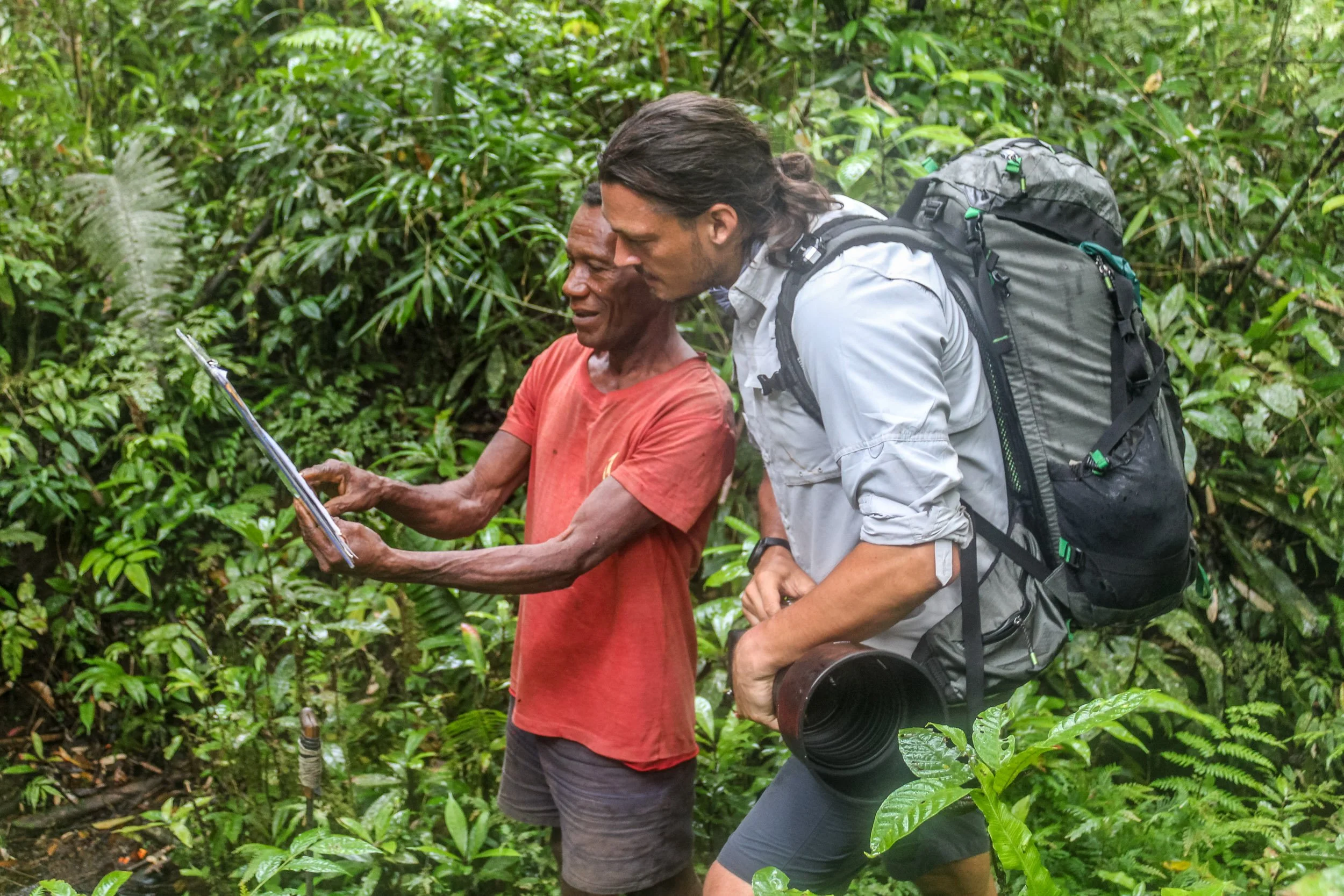
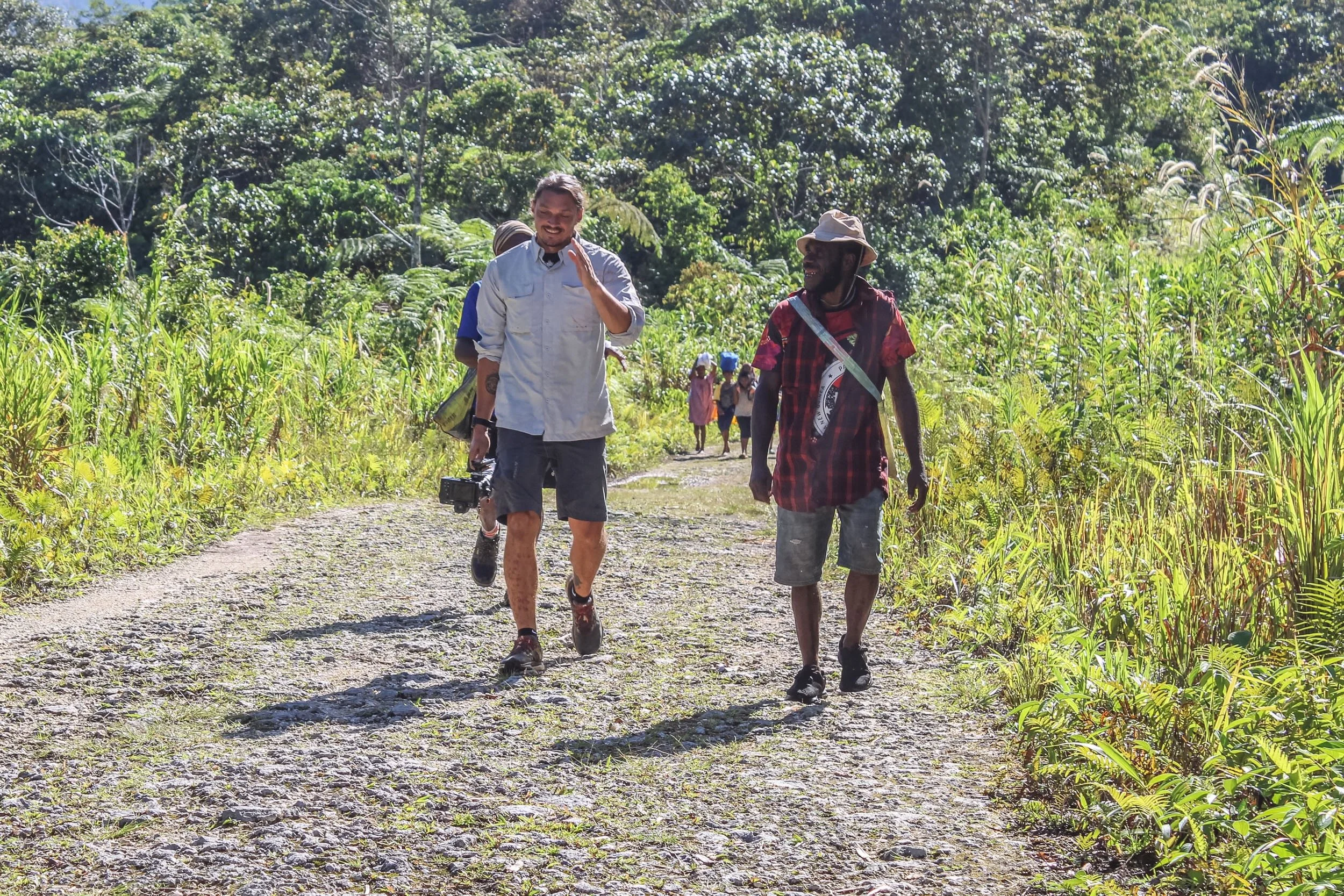
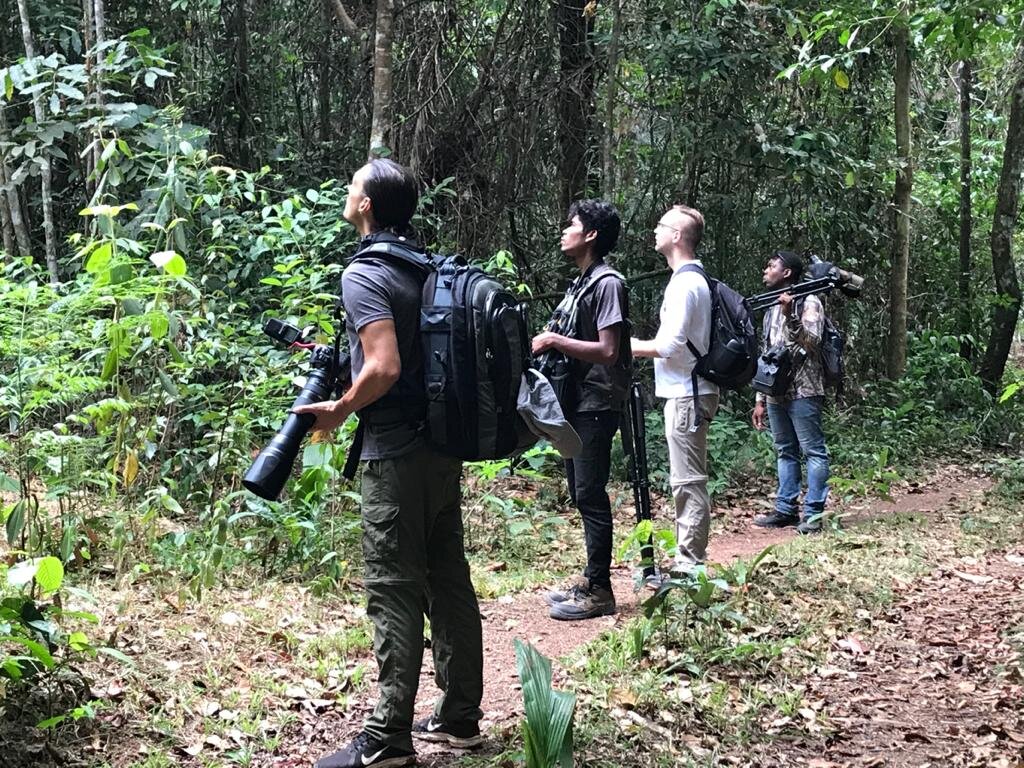
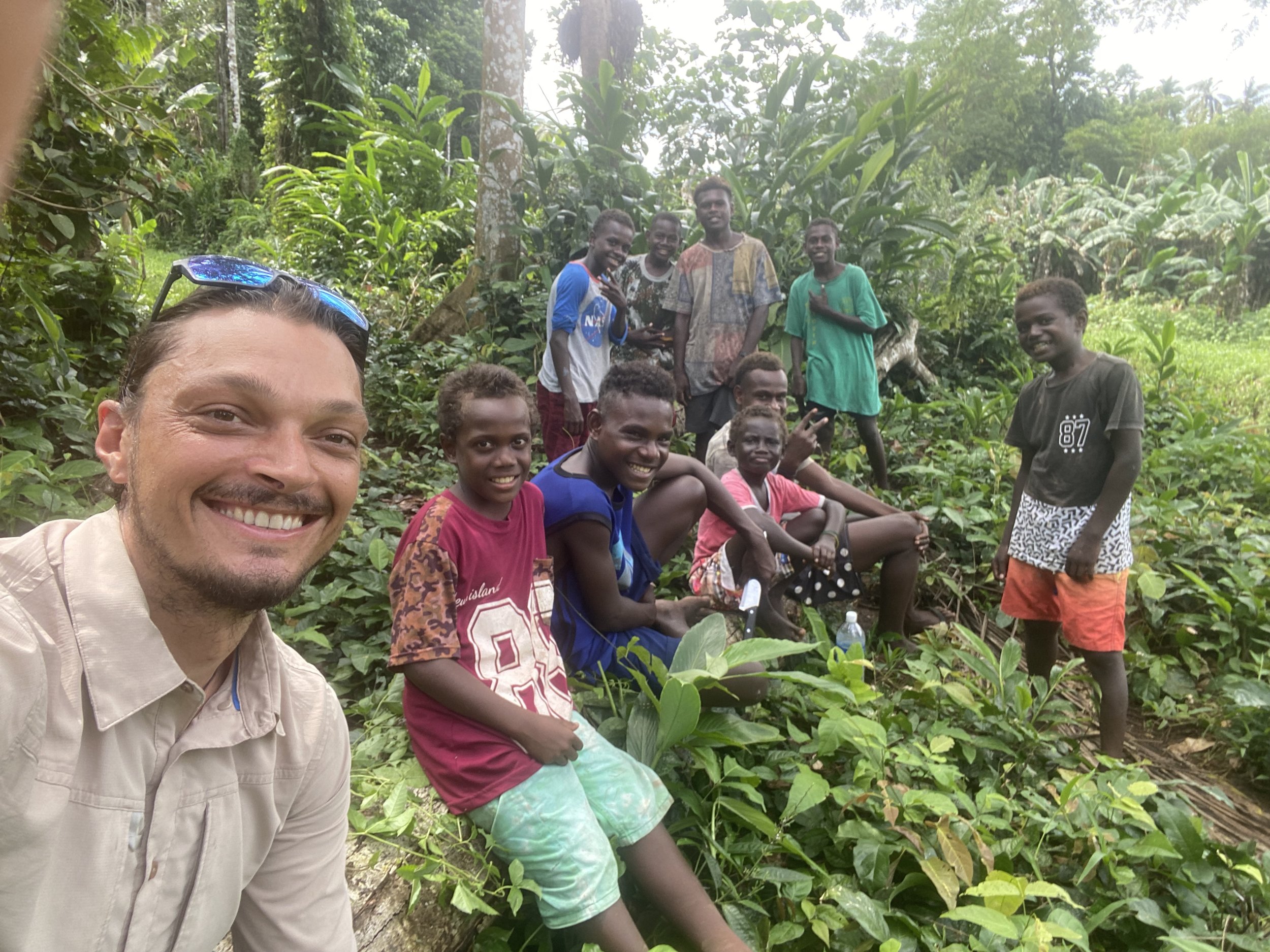
With a local guide in the rainforest of New Britain, Papua New Guinea (2025).
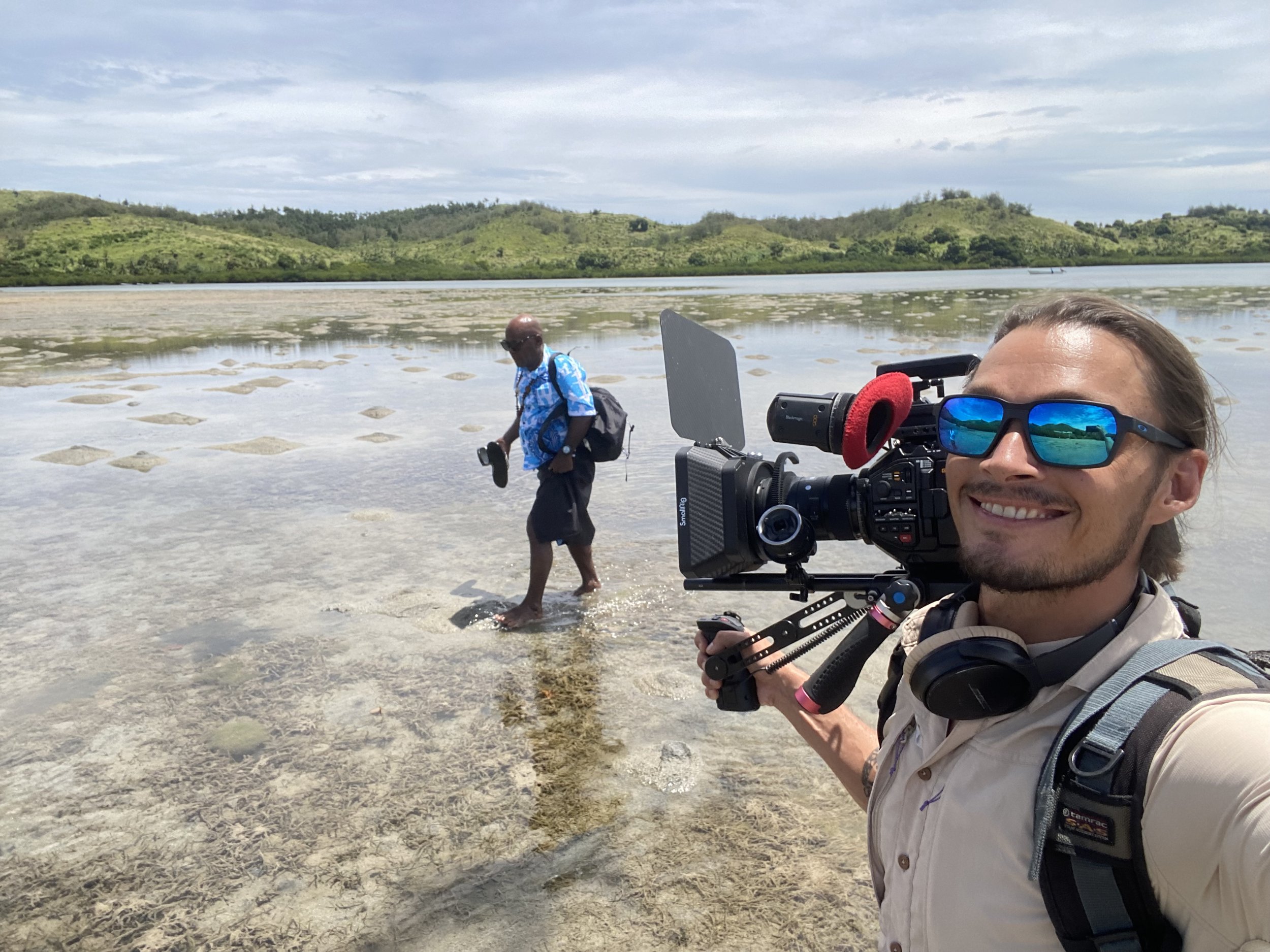
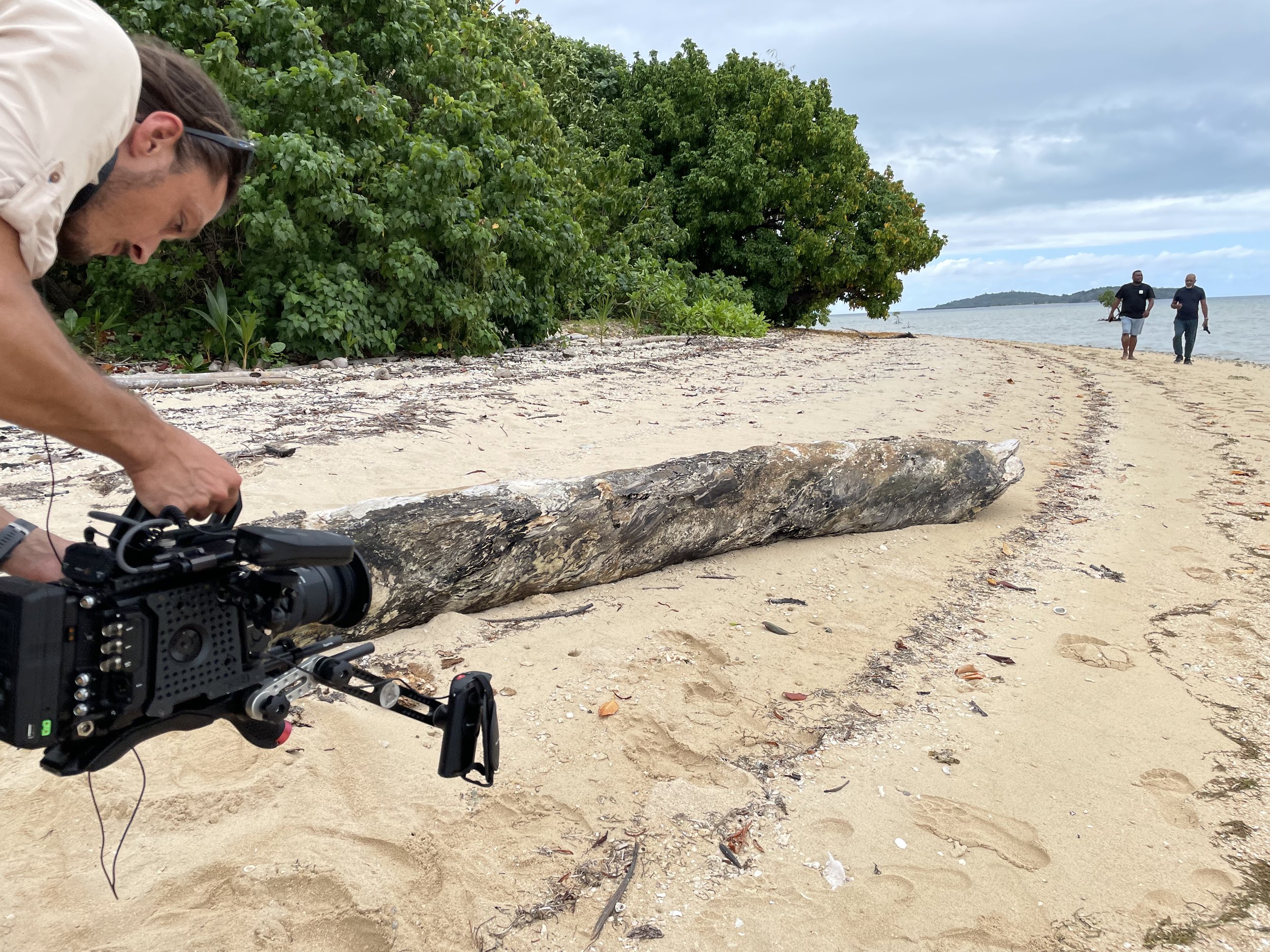
Working across the Pacific has taken me from remote islands and rainforest communities to coral reefs, research stations and rapidly growing urban centres. I have documented projects in Fiji, Papua New Guinea, Solomon Islands, Vanuatu, Tuvalu, Kiribati, Samoa and French Polynesia—often working independently or with small teams in places that require careful planning and the ability to adapt quickly. To date, I have produced more than 100 films alongside a wide range of photographic assignments.
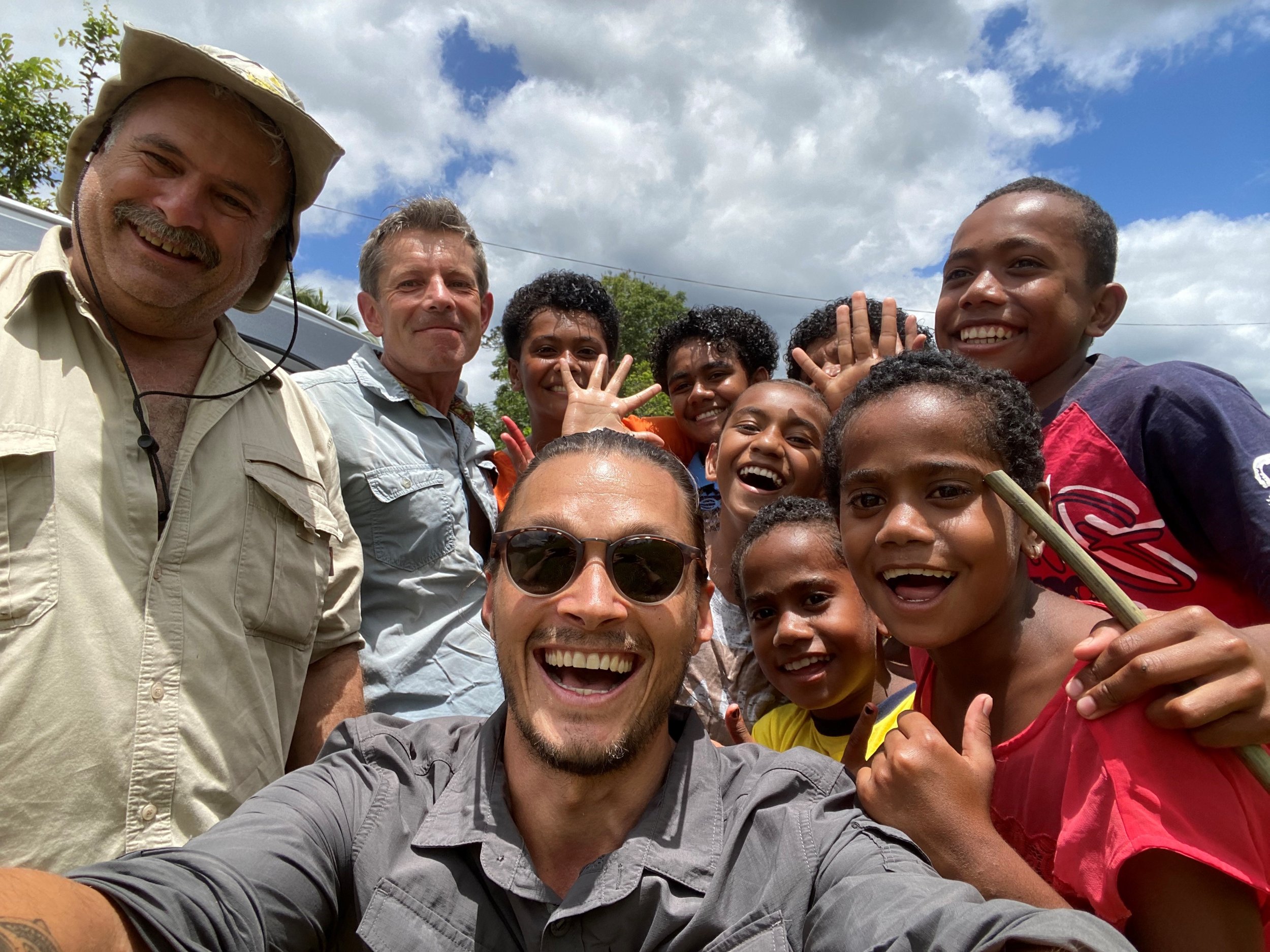
Much of this work is collaborative. I work alongside local communities, researchers and organisations including WWF, UNICEF, UNDP, the World Bank, SPC, SPREP and WCS. Every assignment begins with understanding the local context, the purpose of the project and the people whose experiences are being represented. That approach matters to me just as much as the final photographs and films.
Working Across the Pacific
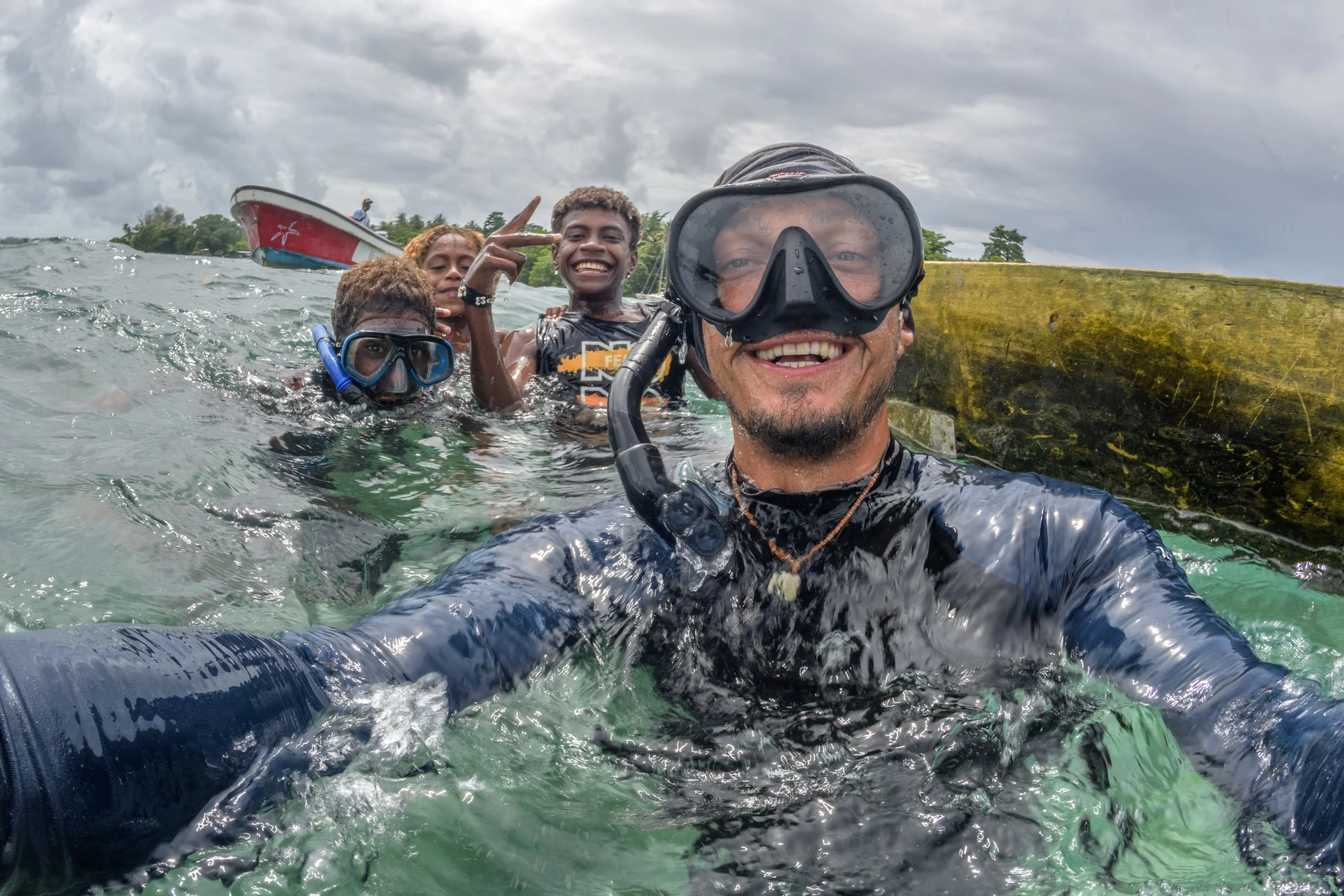
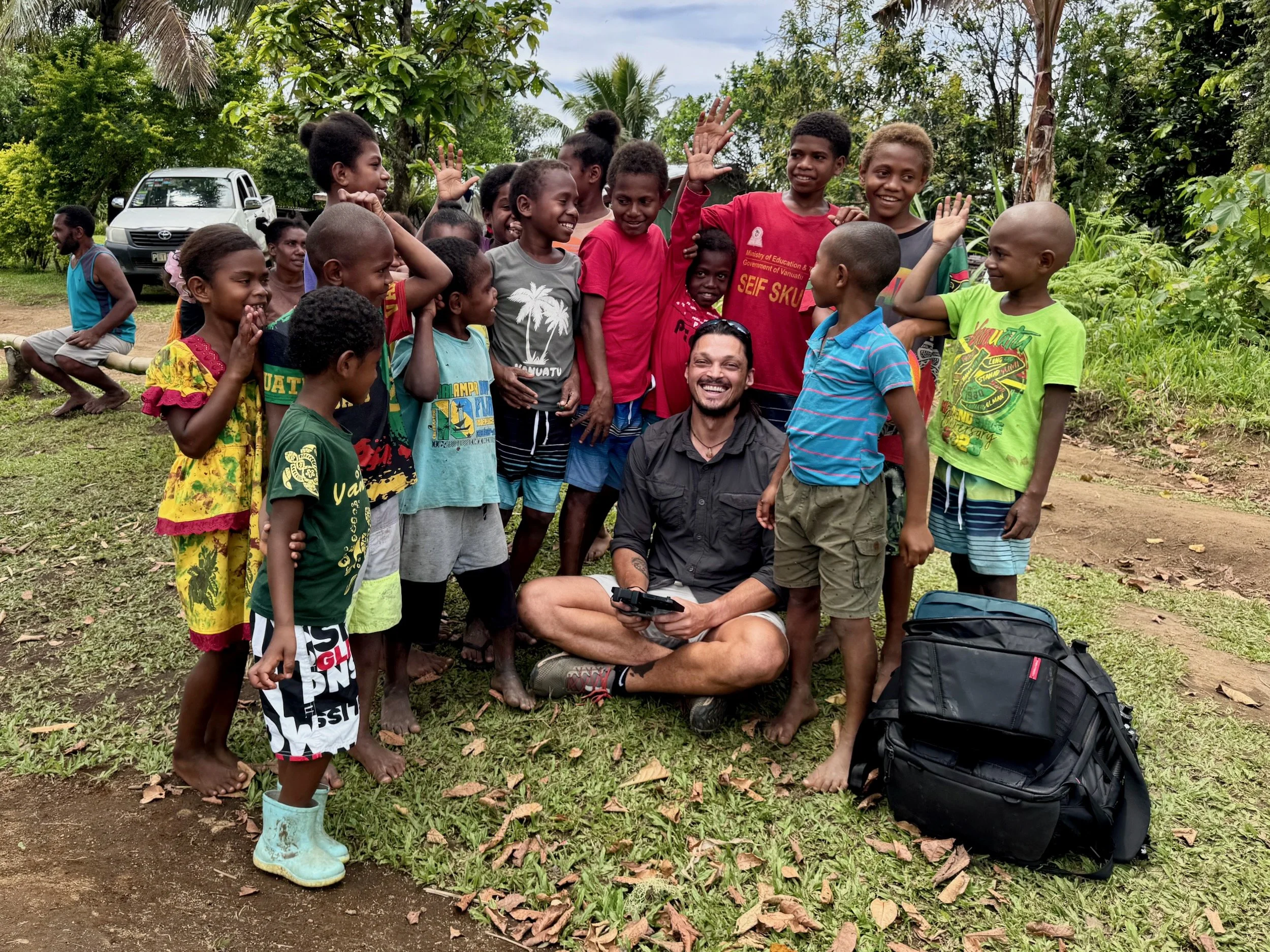
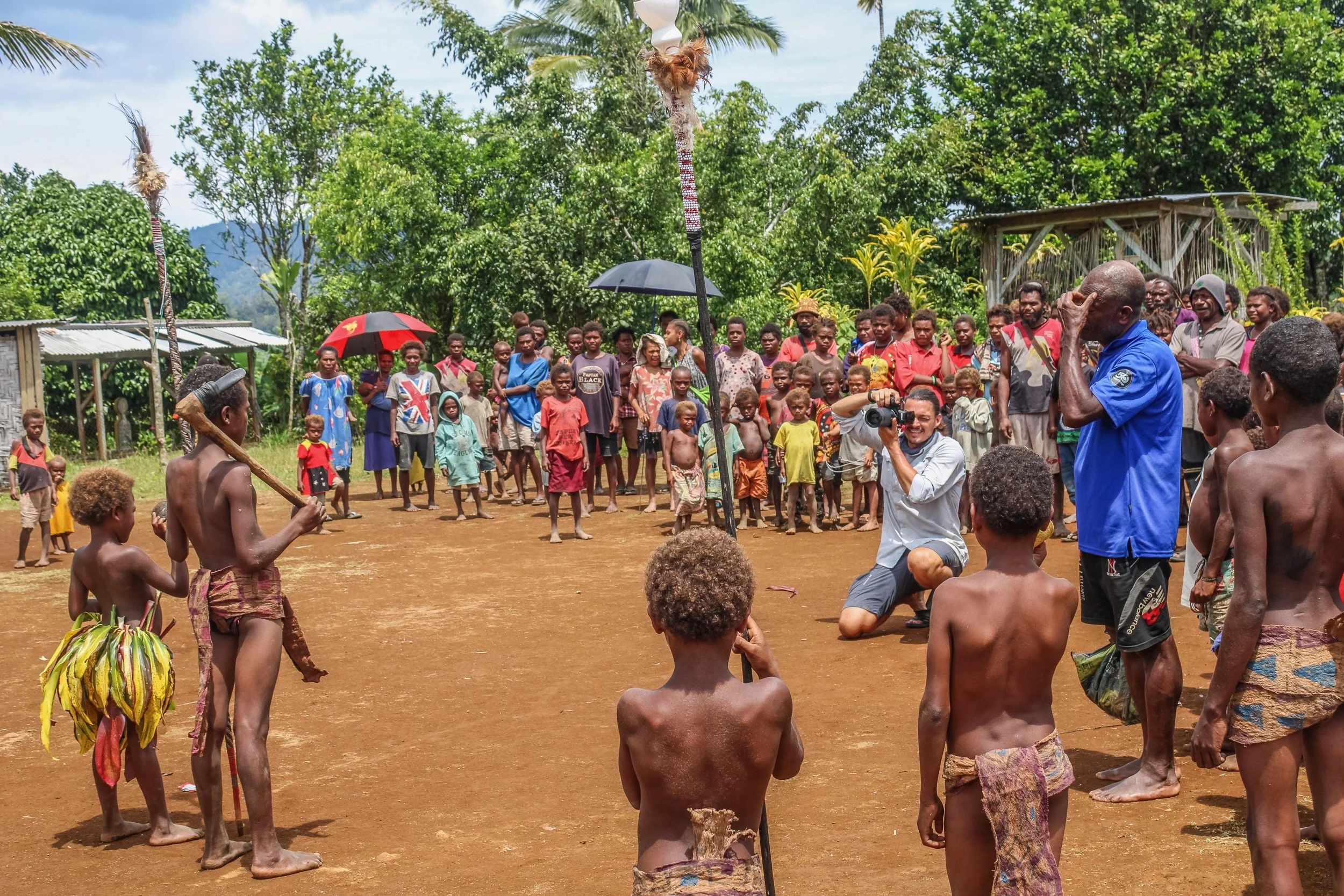
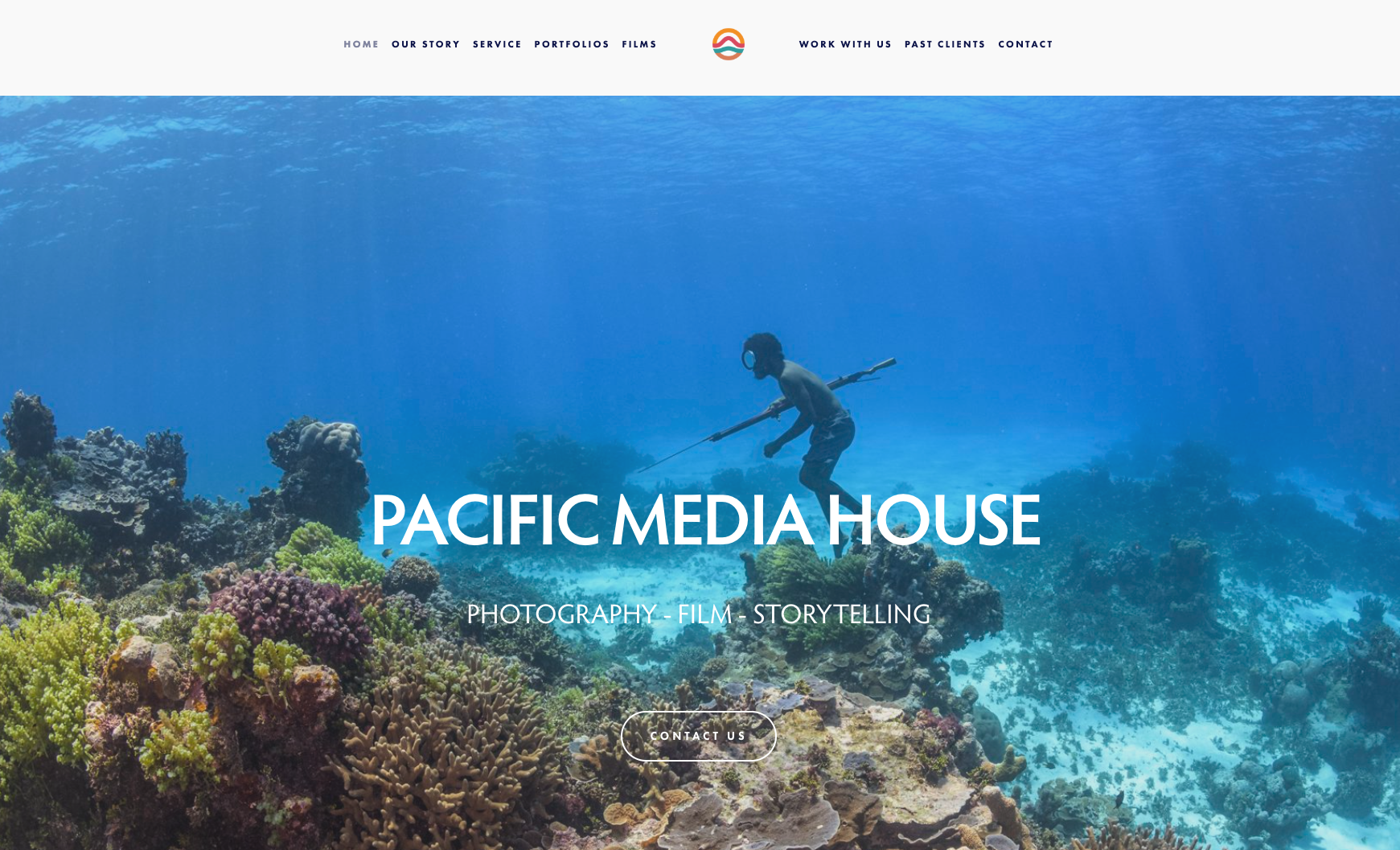
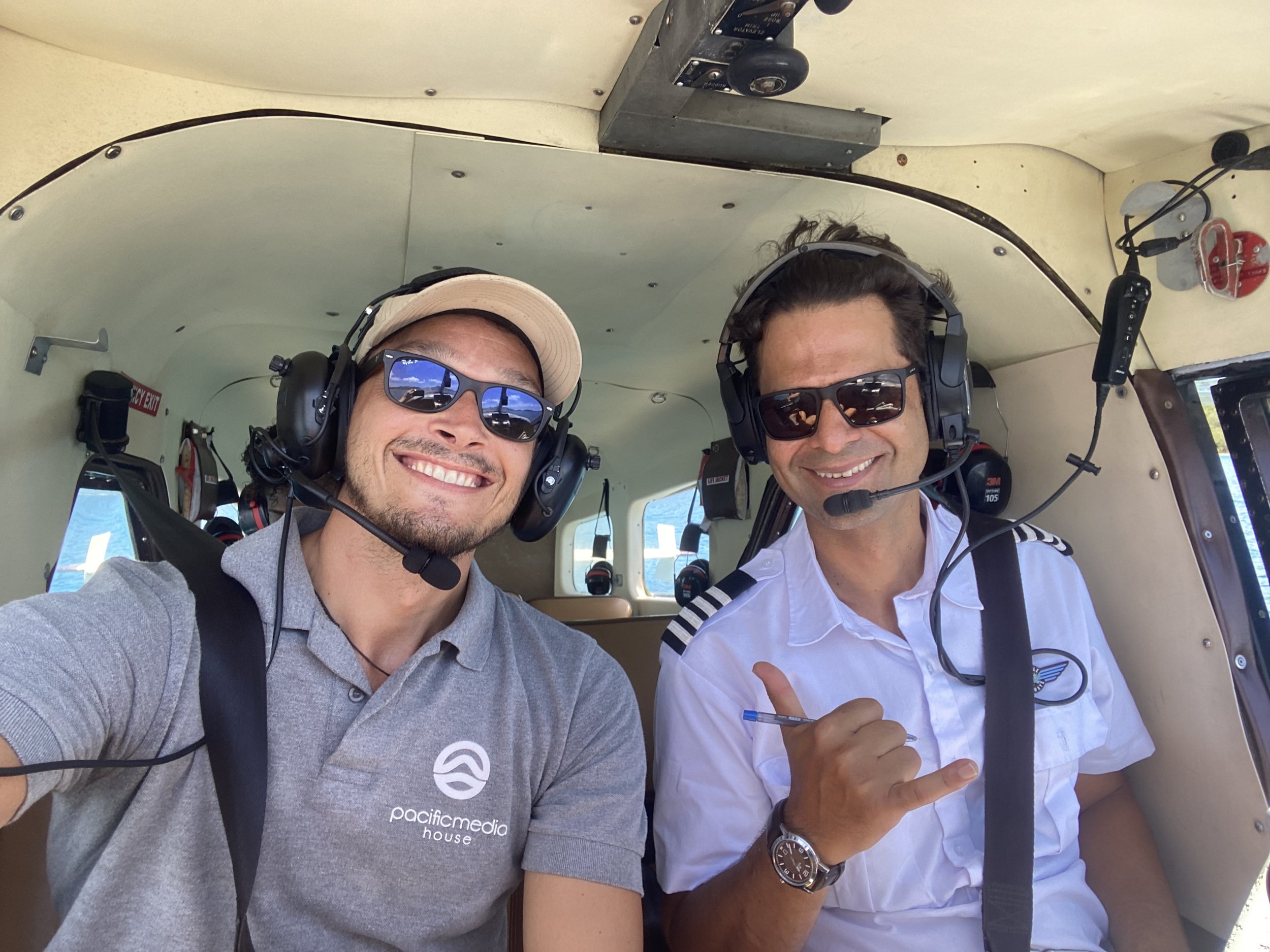
When I returned to Fiji in 2018, I came with the intention of making visual storytelling my full-time profession. What began with independent assignments gradually developed into long-term collaborations across the Pacific, and in 2020 I founded Pacific Media House. Through it, I produce photography and films for conservation organisations, research institutions, development partners and tourism clients—often taking projects from the initial idea through field production and final delivery.
Fiji has since become far more than the place where I am based. After first arriving for research in 2015 and building my life here over many years, I became a Fiji citizen in January 2026. That same year, I founded LUMARA, an independent publishing brand creating books, wildlife guides, games and other products inspired by Fiji’s nature and culture. Pacific Media House and LUMARA now represent two sides of my work: telling stories for others and developing creative projects of my own.
BUILDING A CREATIVE LIFE IN FIJI

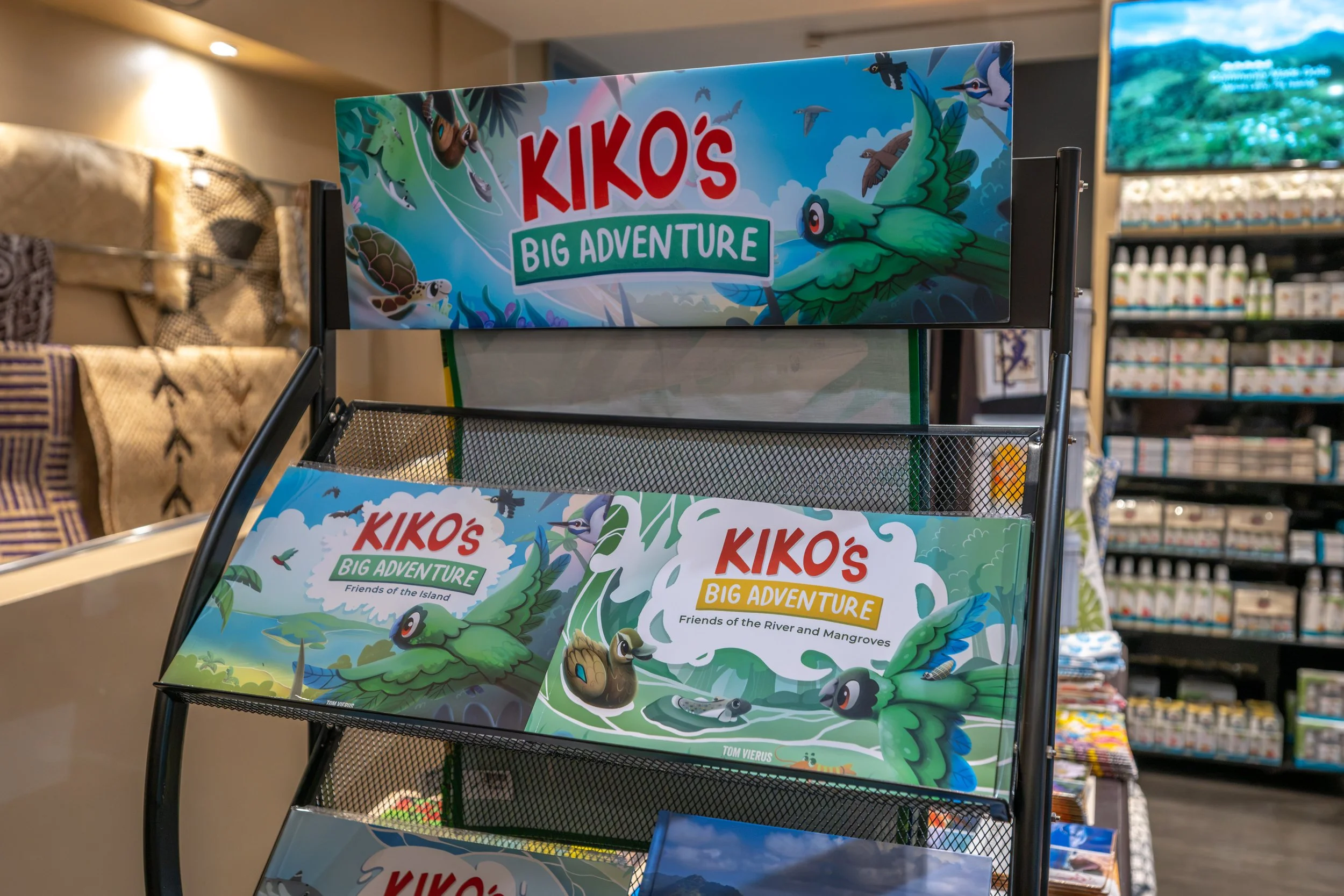
With my first publication: A high-end coffee table book about Fiji’s unique Shark Reef Marine Reserve (2023). Bottom: Kiko’s Bif Adventure is a book series about a local parrot experiencing and learning about Fiji’s wildlife.
MY WORK TODAY
CONSERVATION & DEVELOPMENT
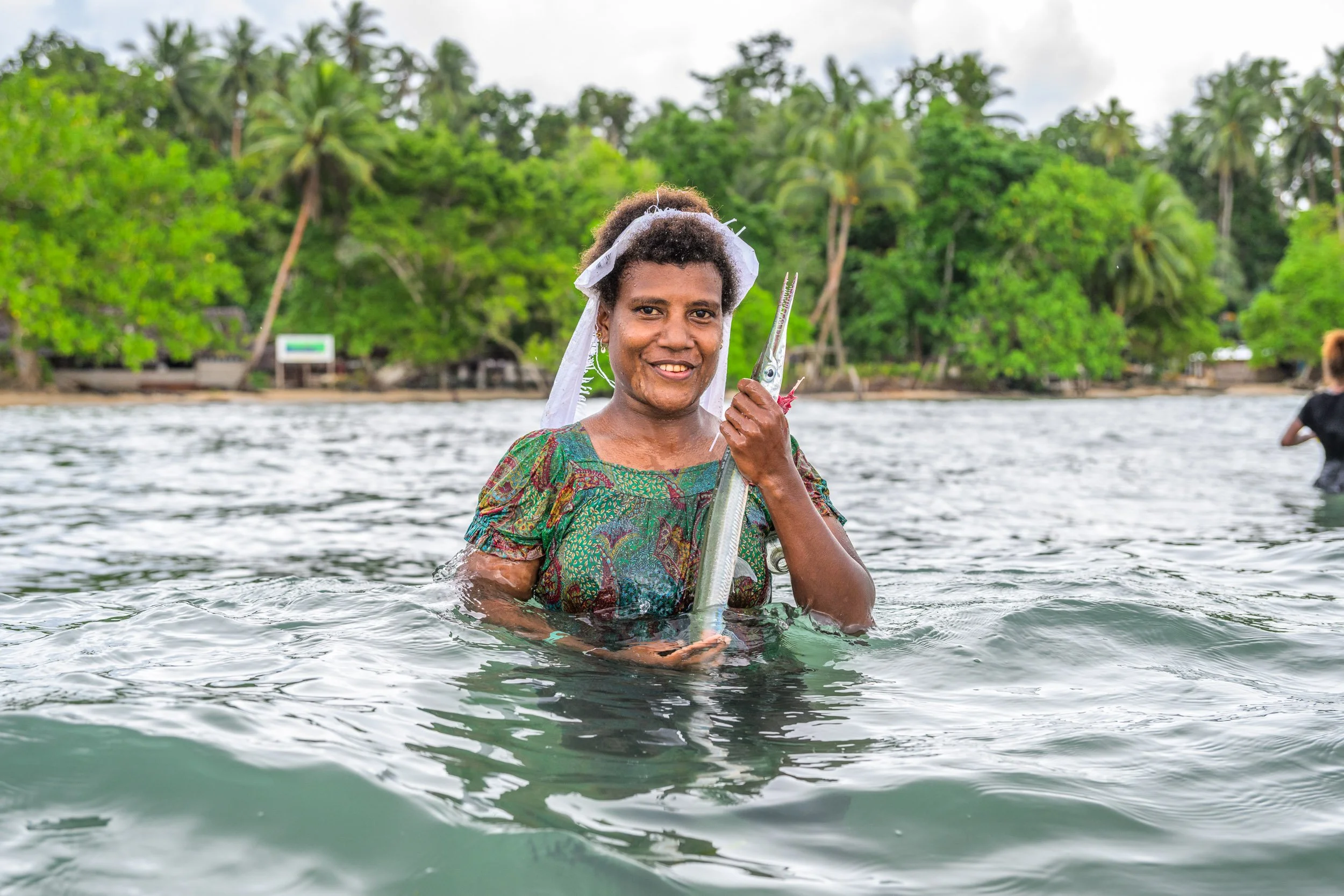
Photography and films documenting science, ecosystems, communities and environmental change.
TOURISM
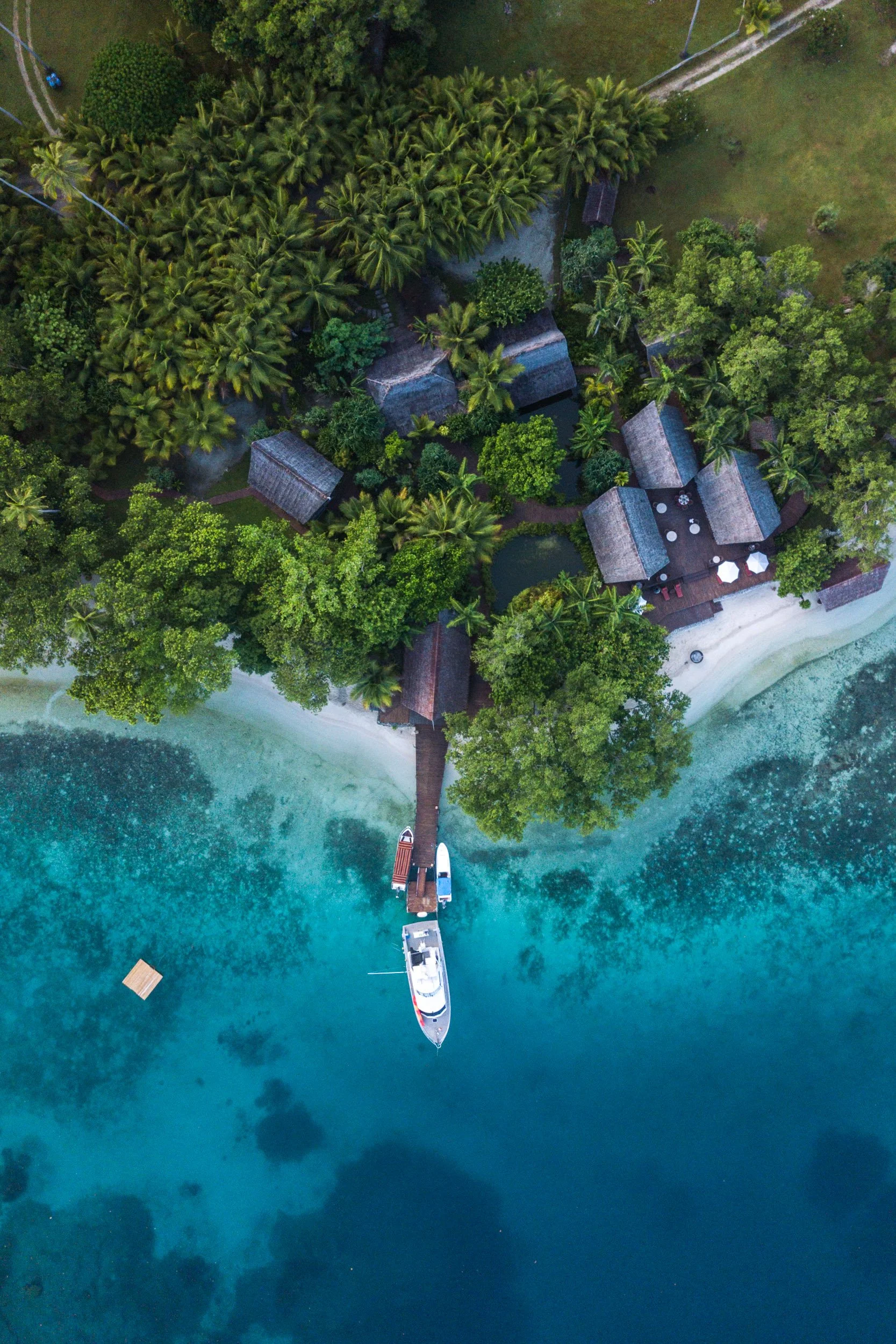
Photography, film and editorial content for resorts, destinations and responsible tourism organisations.
BOOKS & PUBLISHING
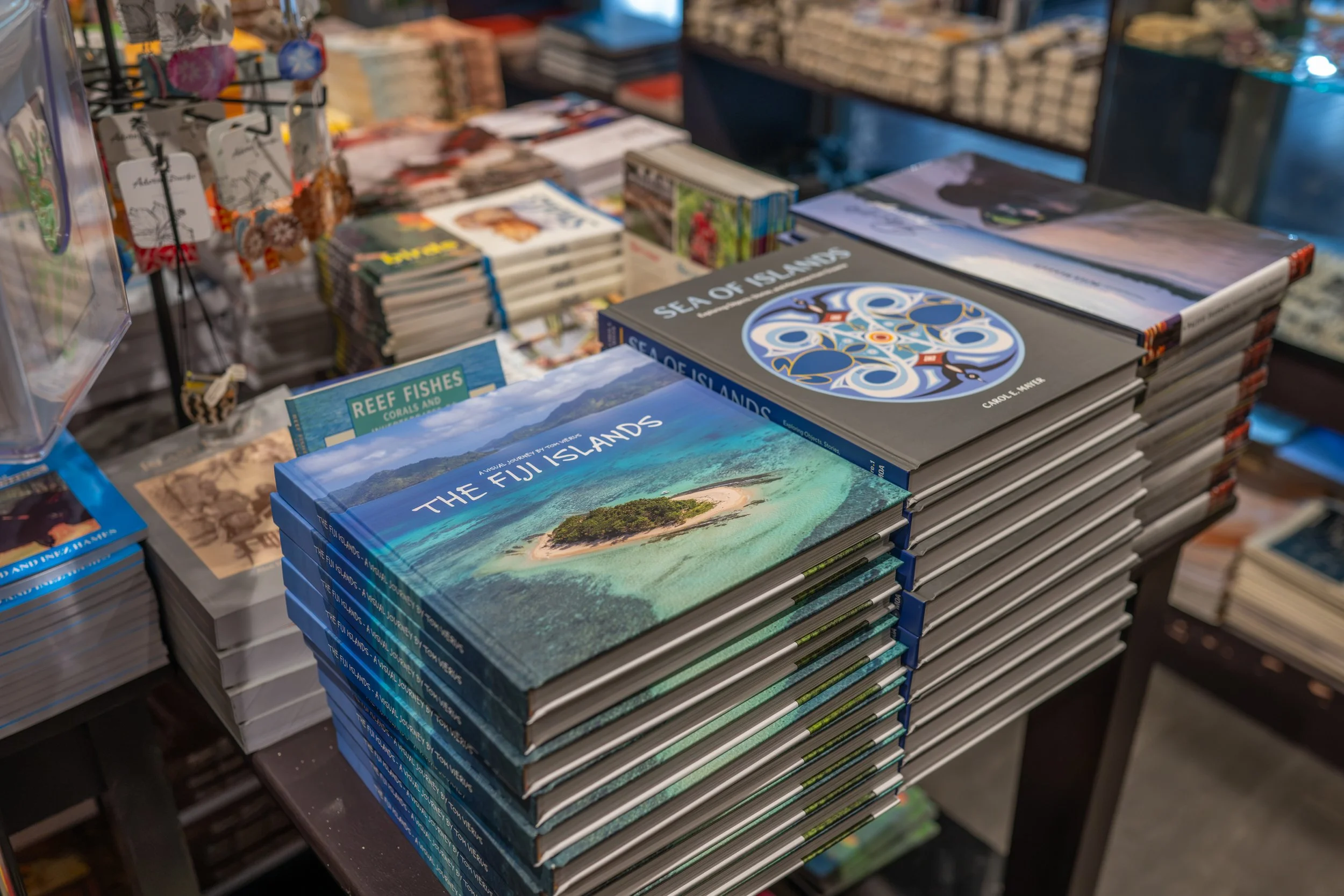
Photographic books, wildlife guides and educational products created from research through to print-ready delivery.
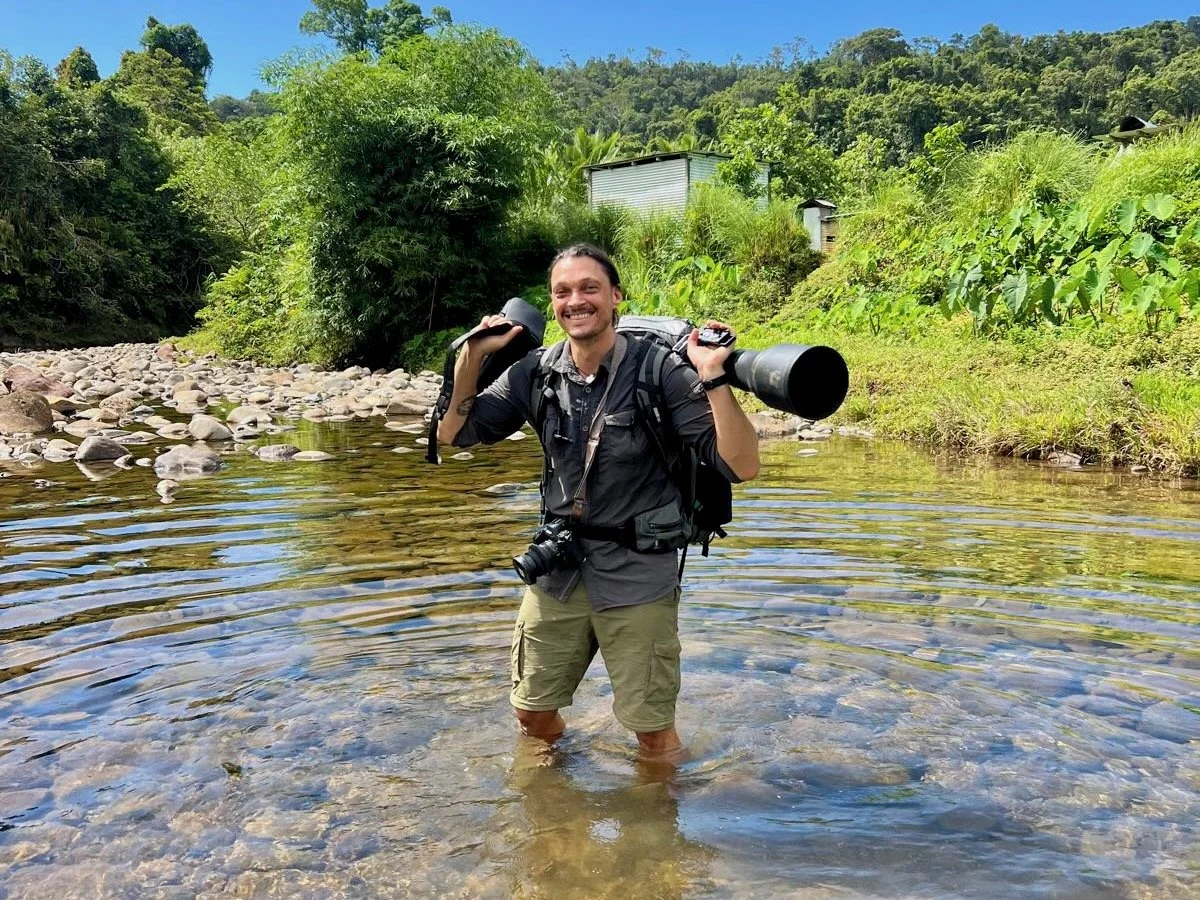
WHY I DO THIS WORK
I have never seen nature as something separate from people. Reefs support food and livelihoods. Forests carry biodiversity, history and cultural knowledge. The future of a species is often inseparable from the choices made by communities, governments, businesses and individuals.
That is why I am particularly drawn to stories where science and lived experience meet. Photography and film can make complex issues understandable without reducing them to statistics. They can help scientific findings reach a wider audience while giving the people experiencing environmental change an opportunity to speak for themselves.
For me, conservation is not limited to major projects or expeditions to remote places. It is also found in the responsibility we accept in everyday life—towards the places where we live, the wildlife around us and the animals that depend on us.
“I HAVE NEVER SEEN NATURE AS SOMETHING SEPARATE FROM PEOPLE.”
ONE DOG AT A TIME
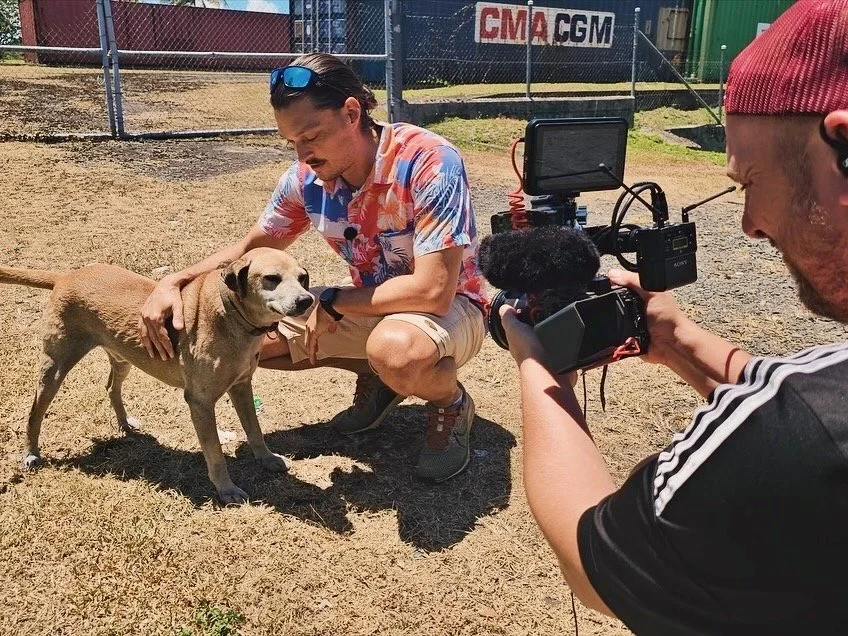
Animal welfare has become one of the most personal parts of my life in Fiji. Over the years, I have photographed the work of the SPCA Fiji Islands, designed and built its website, and produced a film for the Greater Good Foundation about Fiji’s stray dogs and the people working to help them. I also included a spread titled One Dog at a Time in my book The Fiji Islands.
But my involvement does not end with storytelling. I have fed and cared for dozens of stray dogs and arranged veterinary treatment and desexing whenever I could. Some eventually became part of my own family. These individual actions cannot solve Fiji’s wider animal-welfare challenges, but they can completely change one animal’s life. That simple idea—help where you can, one dog at a time—continues to guide my involvement.
Selected milestones
-

Master of Science in Marine Ecology
2016
I completed the ISATEC Master’s programme at the University of Bremen in cooperation with the University of the South Pacific, specialising in shark ecology following eight months of field research in Fiji.
-
FOUNDING PACIFIC MEDIA HOUSE
2020
I founded Pacific Media House to create complete photography, film and visual storytelling productions for conservation, development and tourism clients across Fiji and the wider Pacific.
-
INTERNATIONAL LEAGUE OF CONSERVATION PHOTOGRAPHERS
2021 - 2025
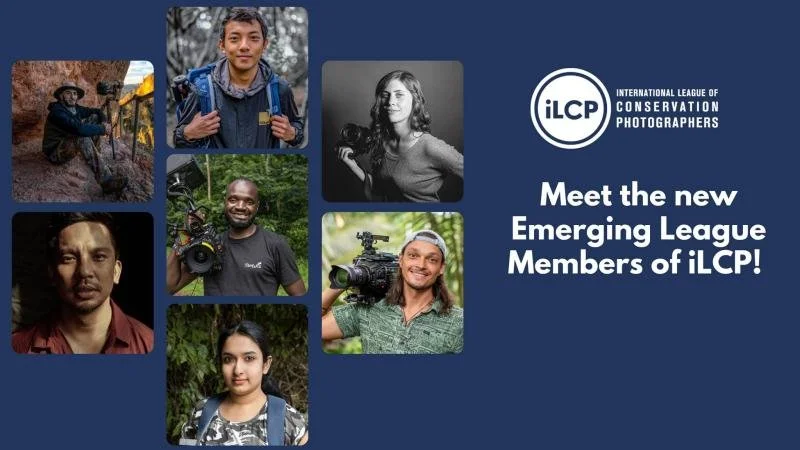
I joined the iLCP Emerging League in 2021 and became an Associate Fellow in 2025, joining a global community using photography to advance conservation.
-

THE SHARK REEF MARINE RESERVE - PHOTO BOOK
2023
After more than five years of work, I published a photographic book documenting Fiji’s Shark Reef Marine Reserve, its wildlife, science and conservation story.
-
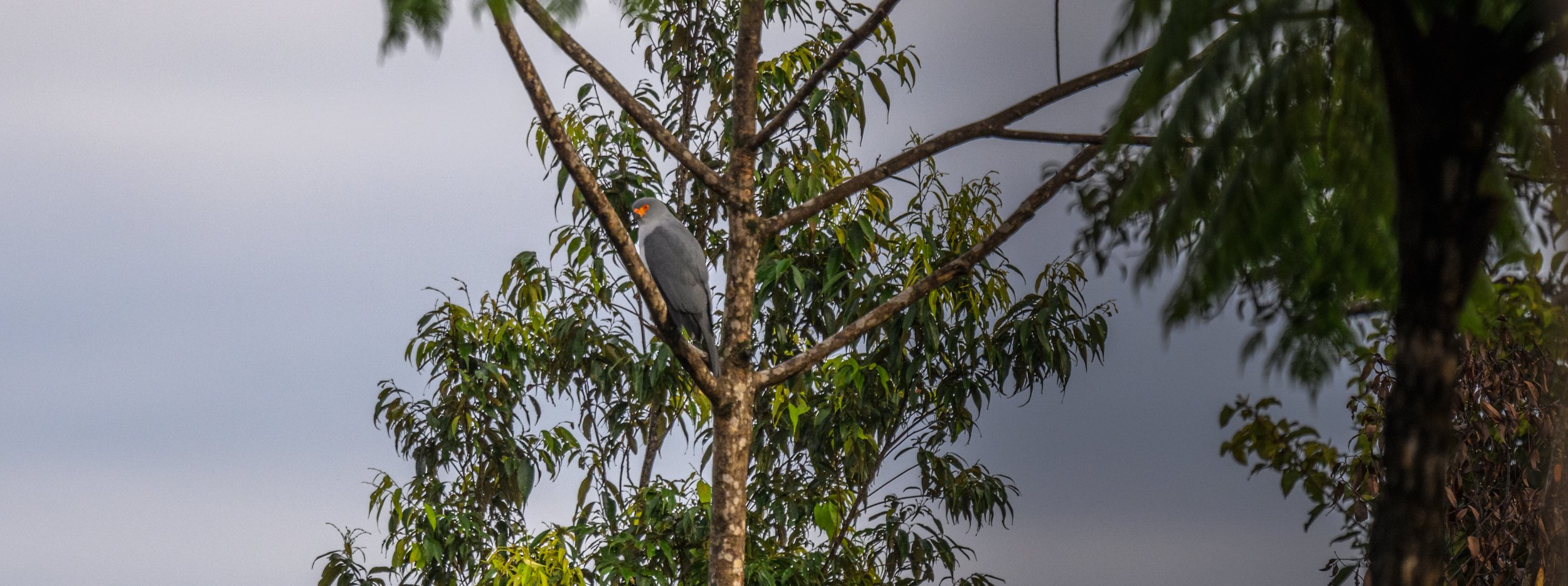
THE NEW BRITAIN GOSHAWK - FIRST KNOWN PHOTO
2024
On assignment in Papua New Guinea in 2024, I captured the first known photograph of the New Britain Goshawk; the confirmed sighting was published in 2025.
-
FOUNDING LUMARA
2026
I founded LUMARA, a Fiji-based publishing and products brand creating books, guides, games and other products inspired by the country’s natural and cultural heritage and meant to inspire conservation.
HOW I WORK
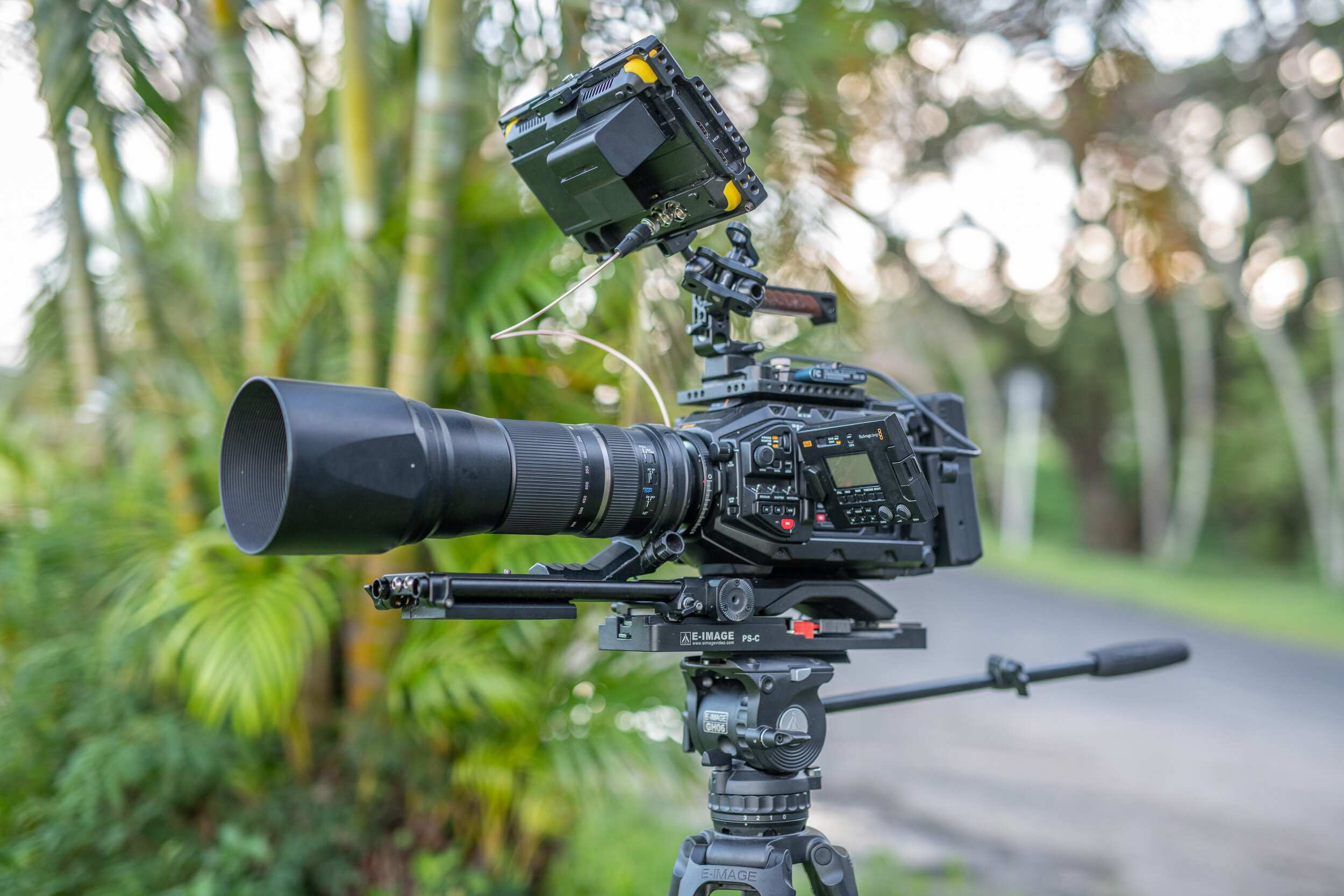
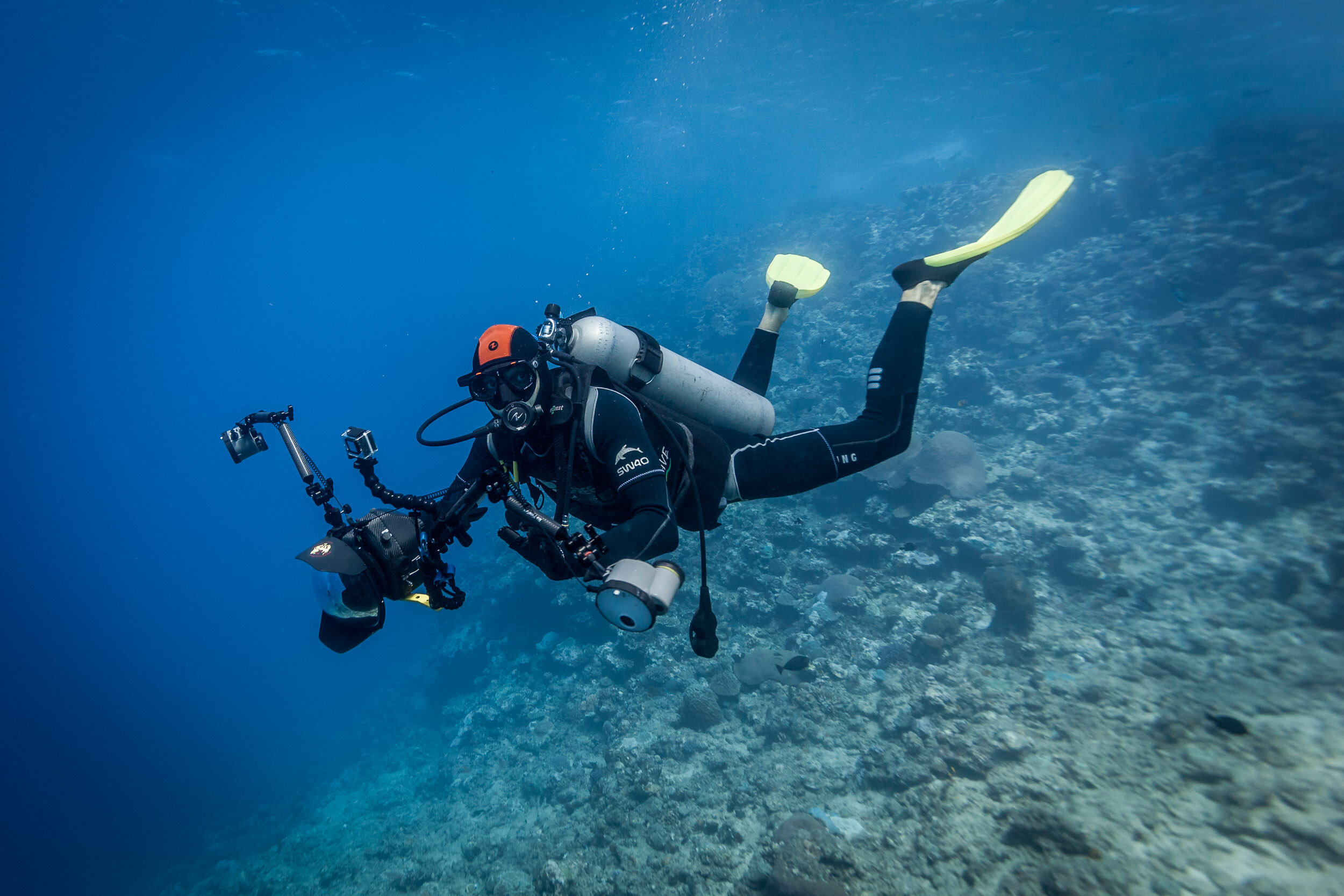
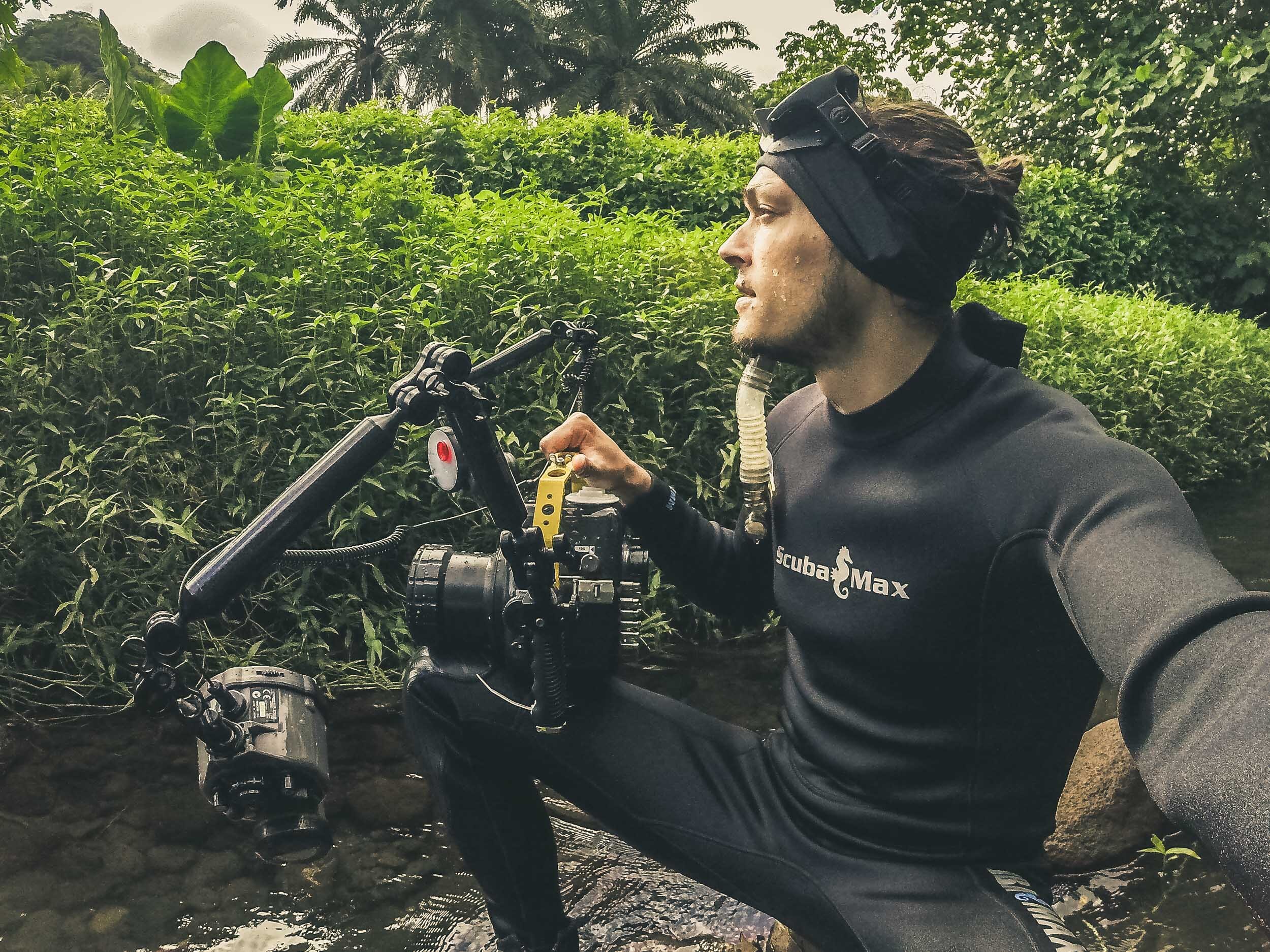
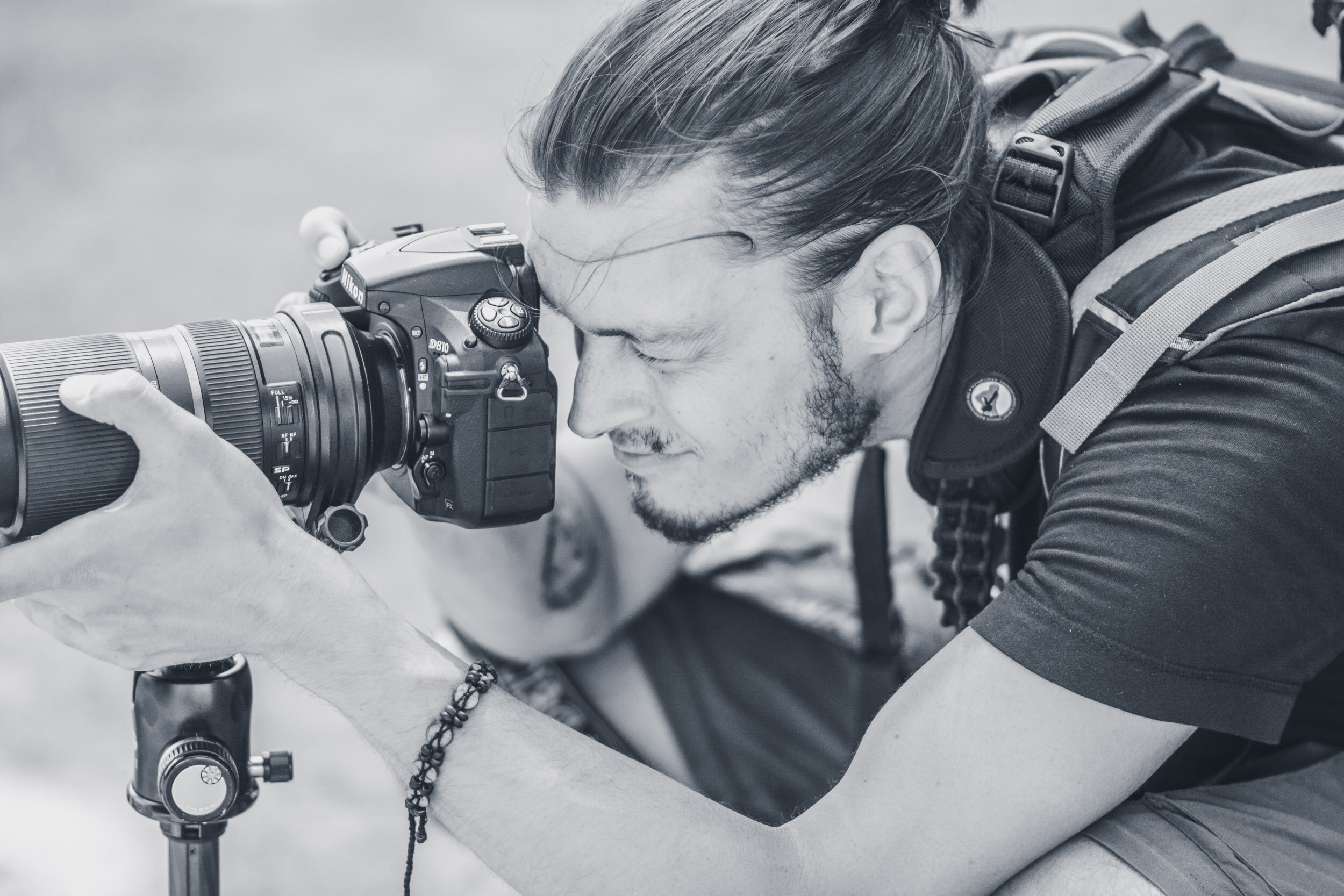
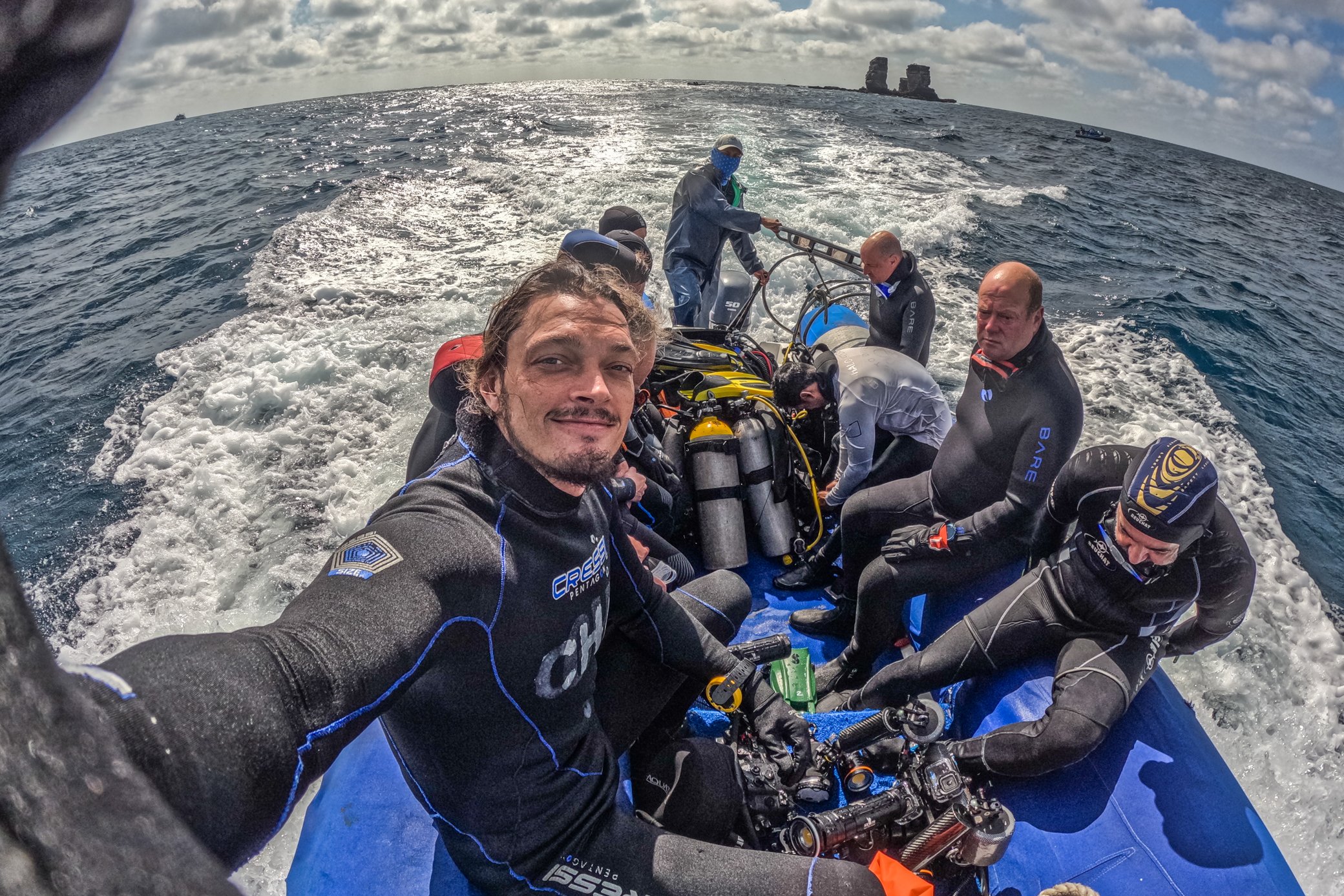
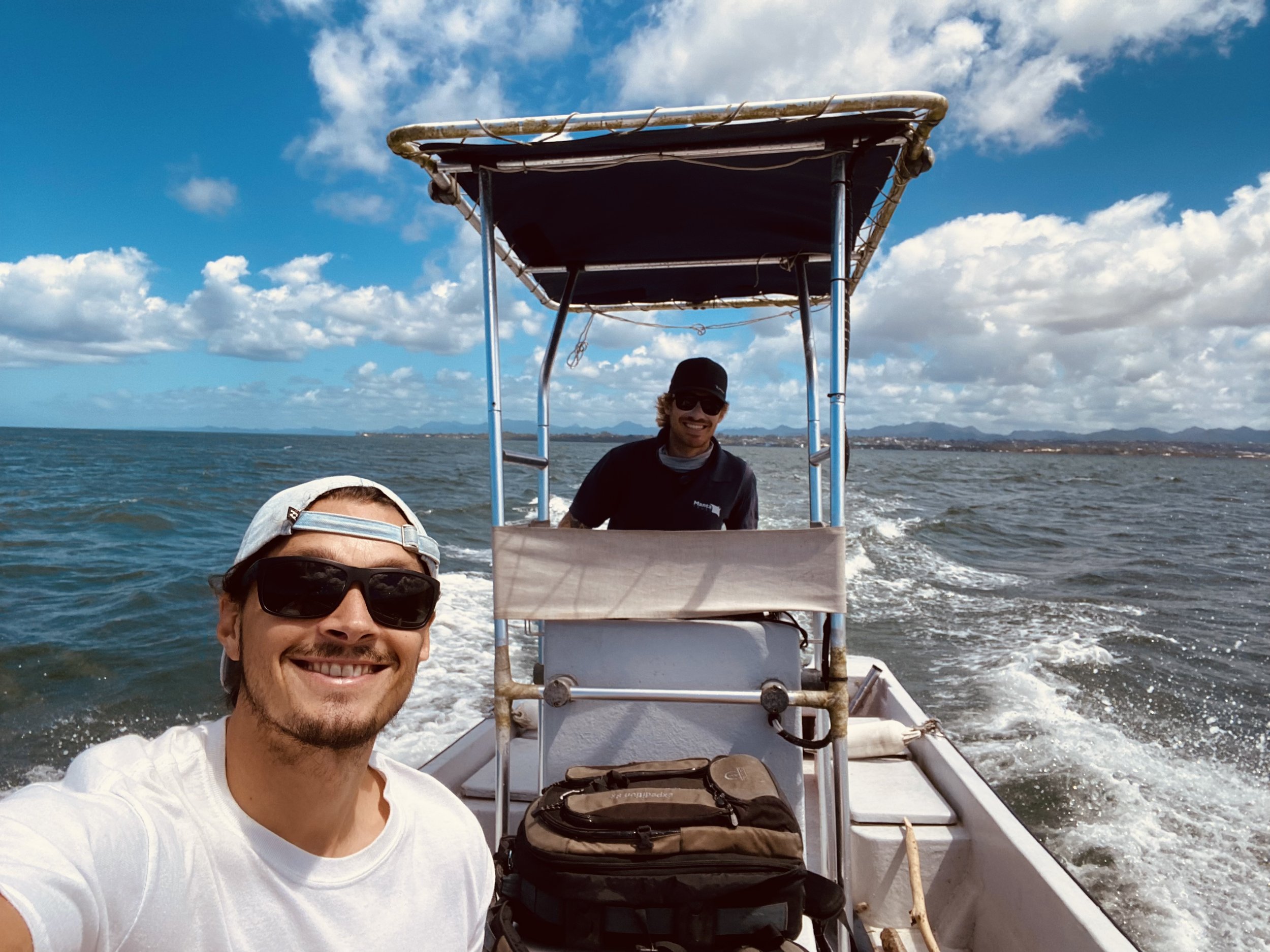
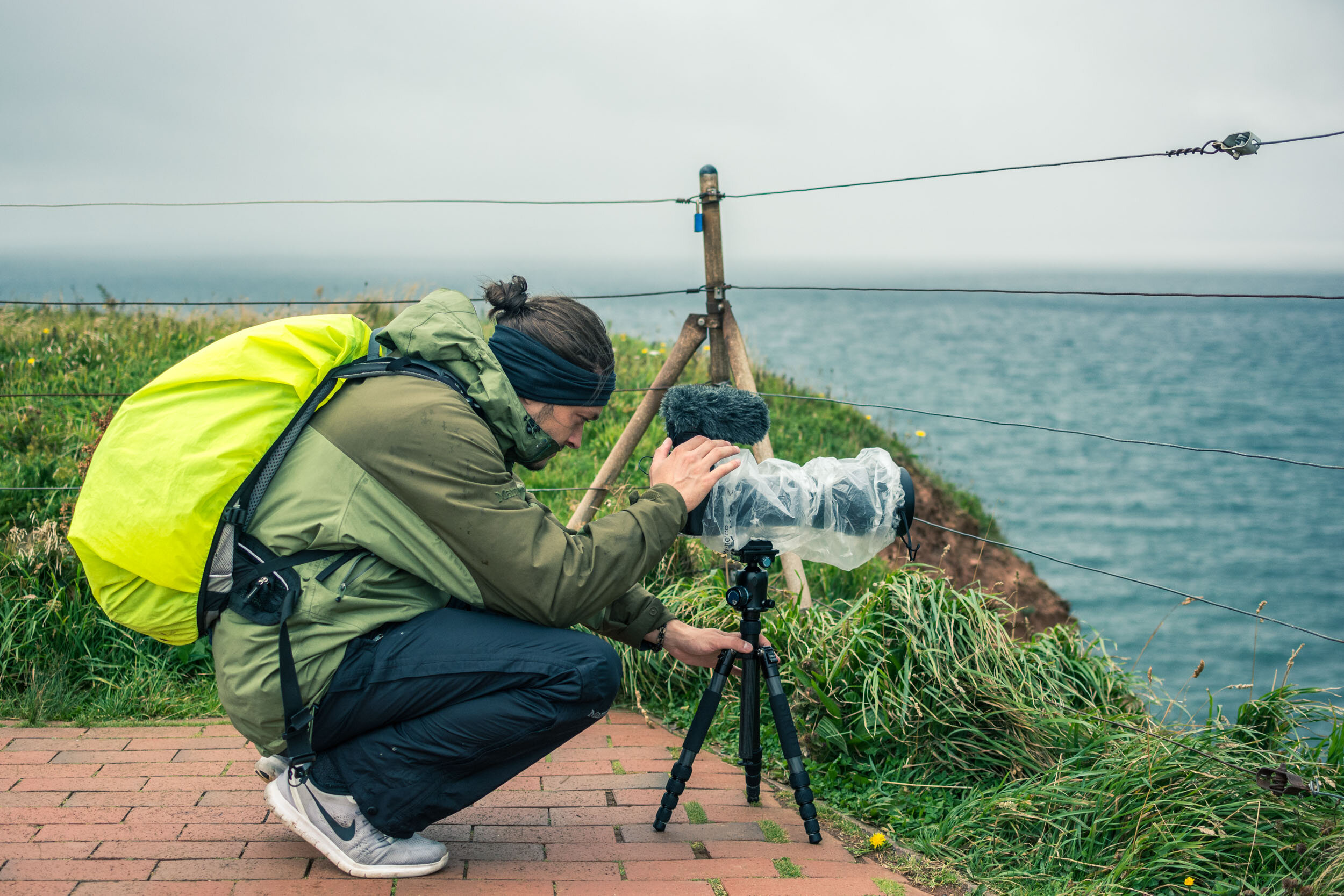
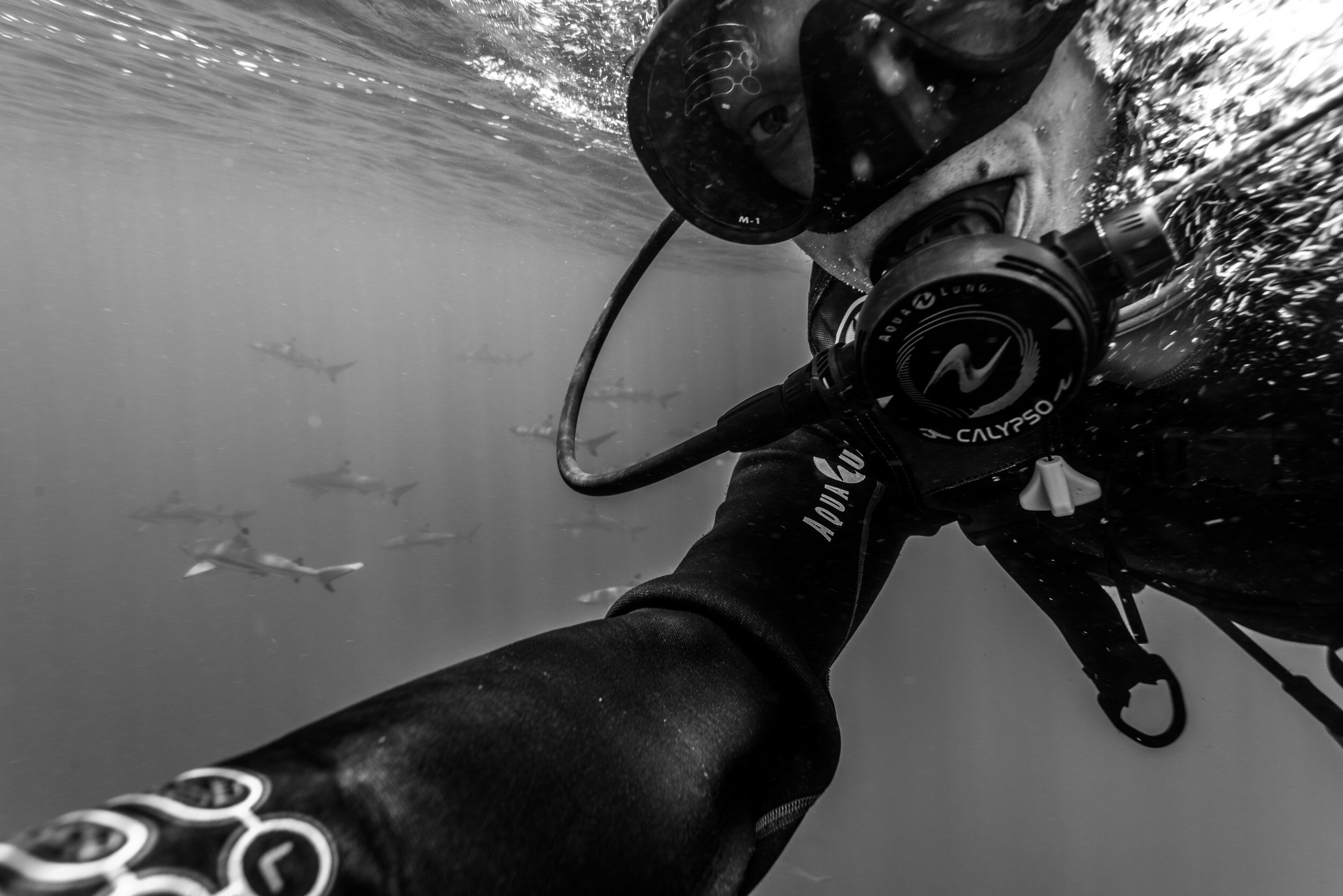
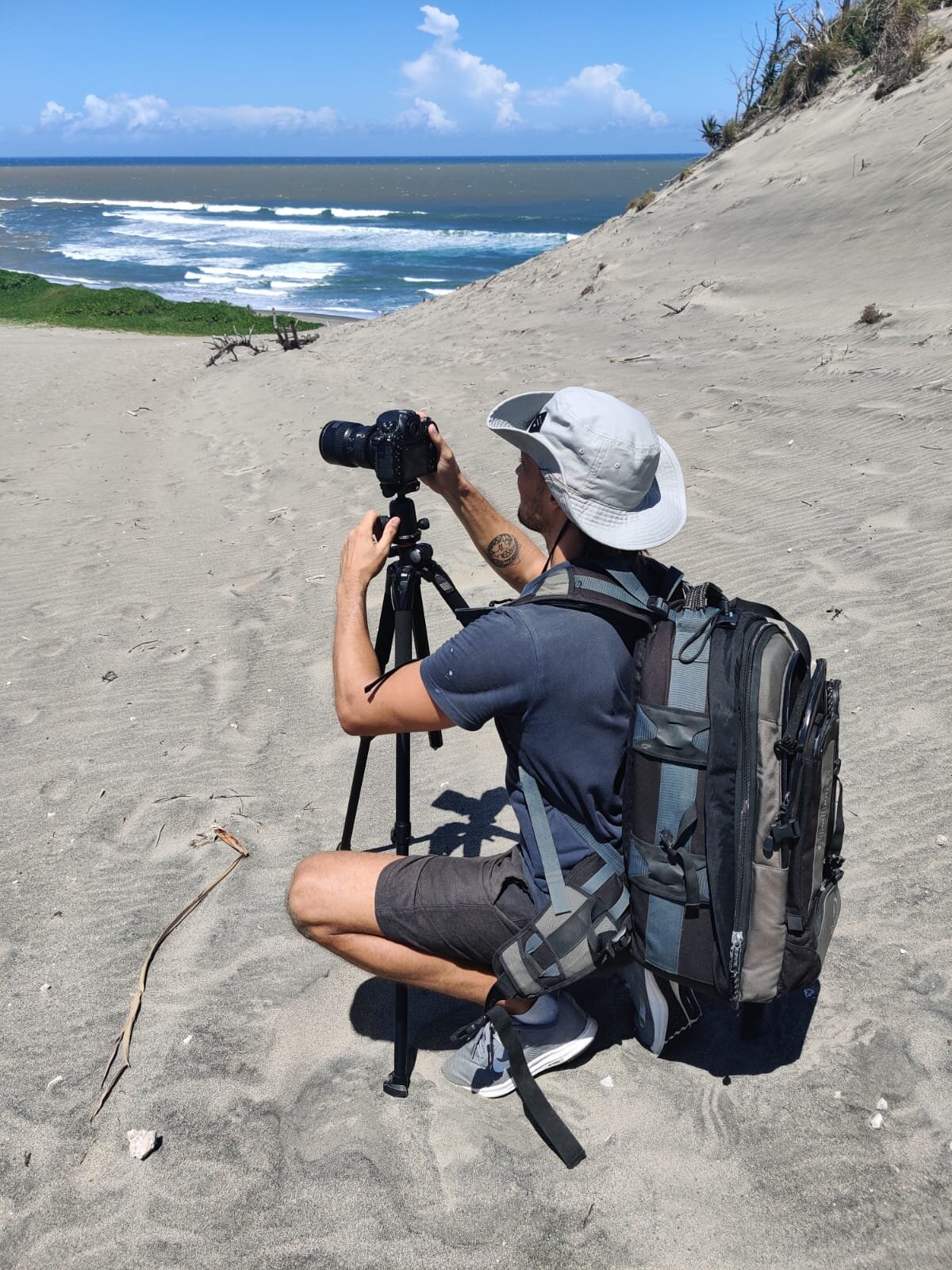
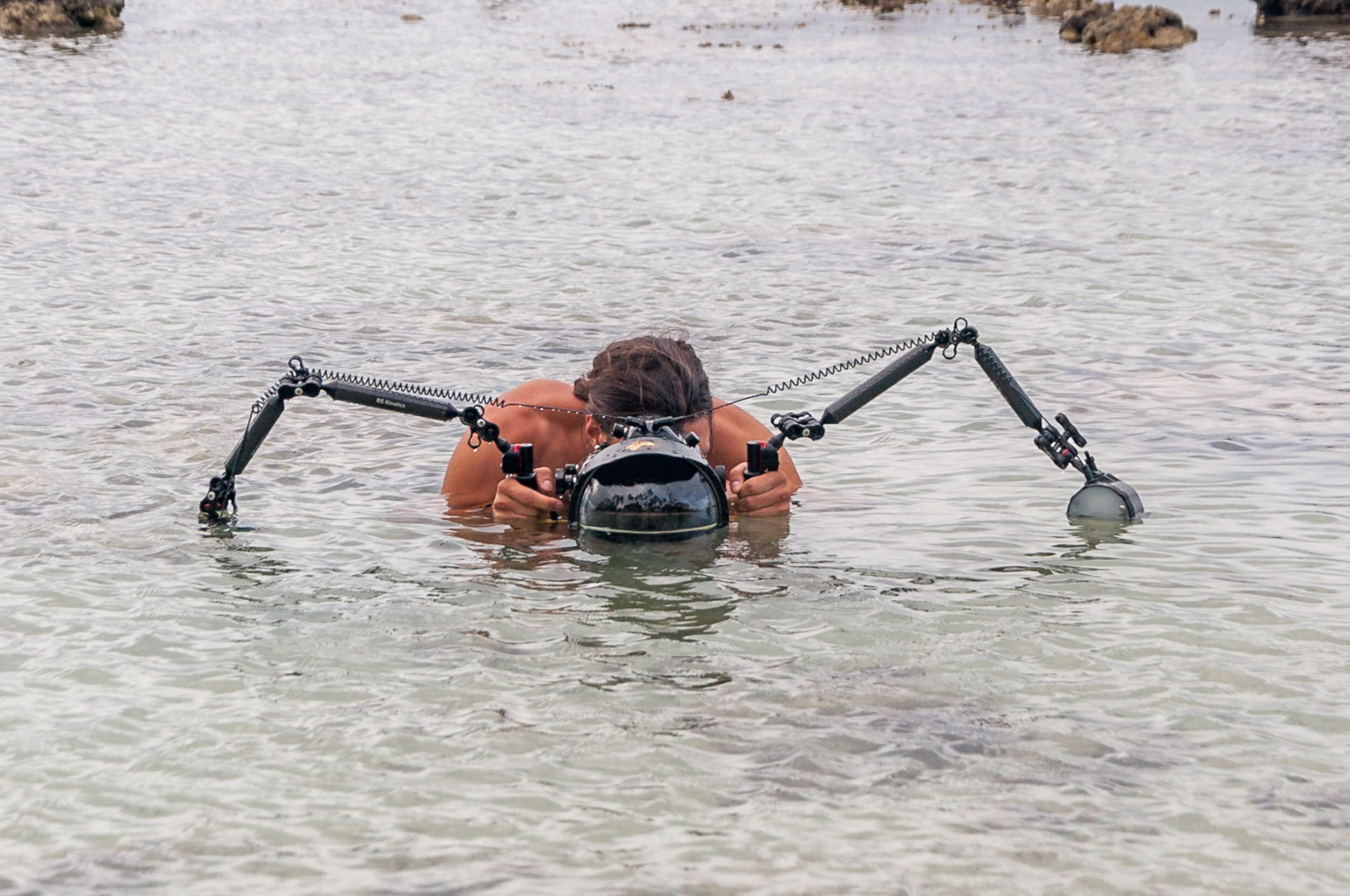
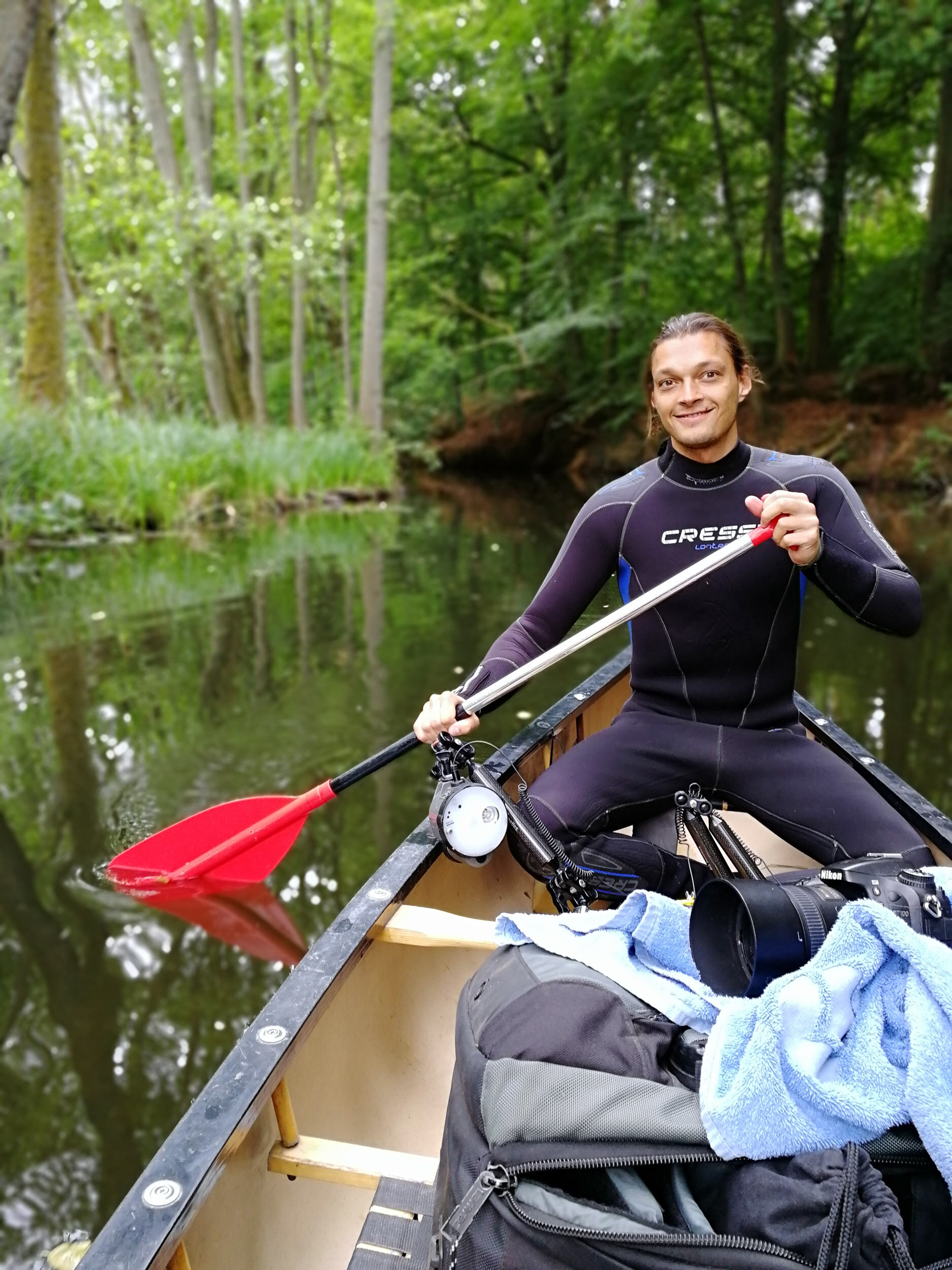
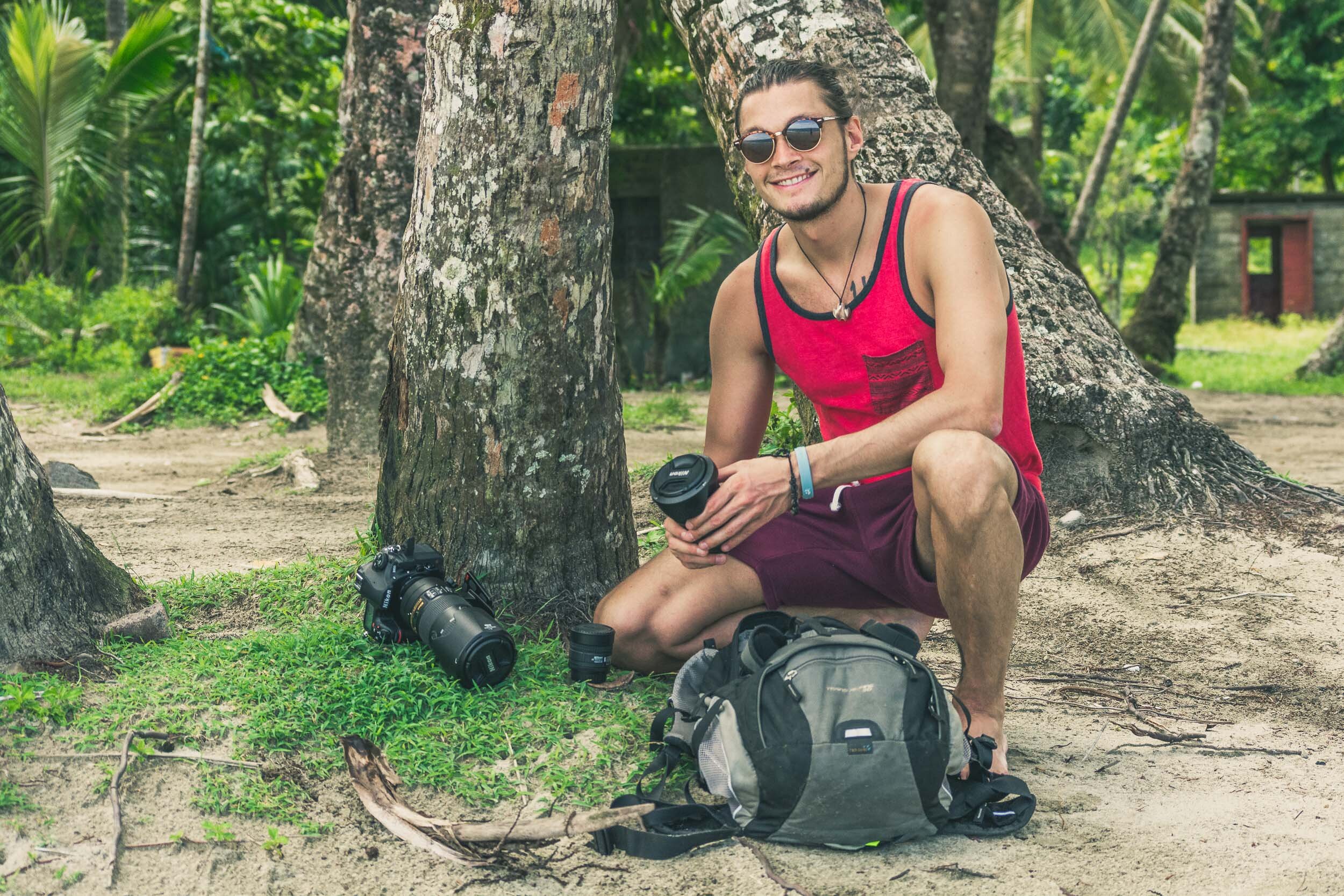
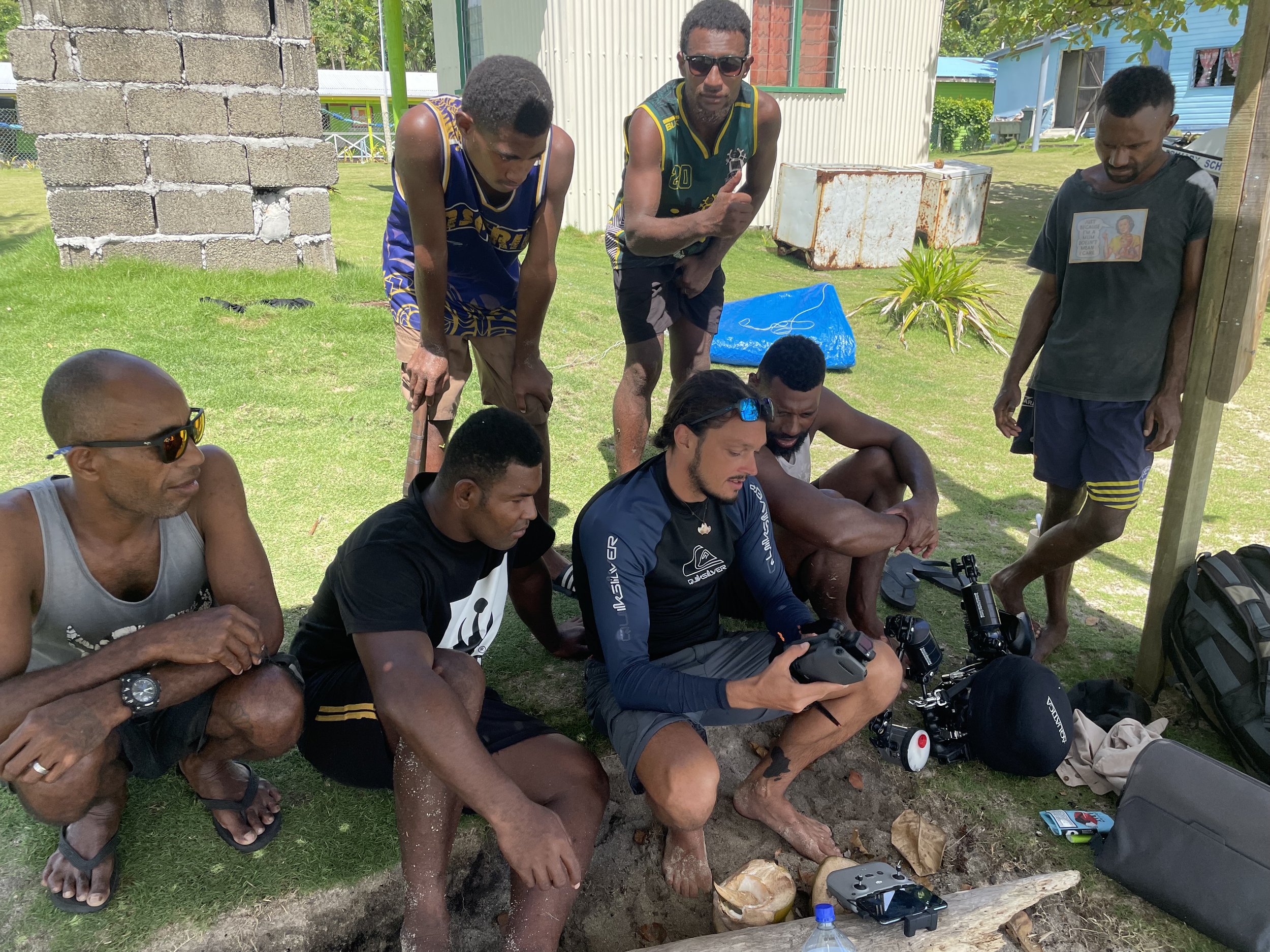
I often work as a compact, self-contained production unit, managing projects from early research and concept development through field production and final delivery. Depending on the assignment, that can include photography, directing, cinematography, interviews, drone work, underwater production and editing.
Working across the Pacific has taught me to prepare carefully, adapt quickly and remain dependable in remote and rapidly changing conditions. Technical quality matters, but it is always in service of the story, the people involved and the purpose of the project.
For larger assignments, I bring in trusted regional collaborators according to the needs of the project.
PROFESSIONAL SUPPORT
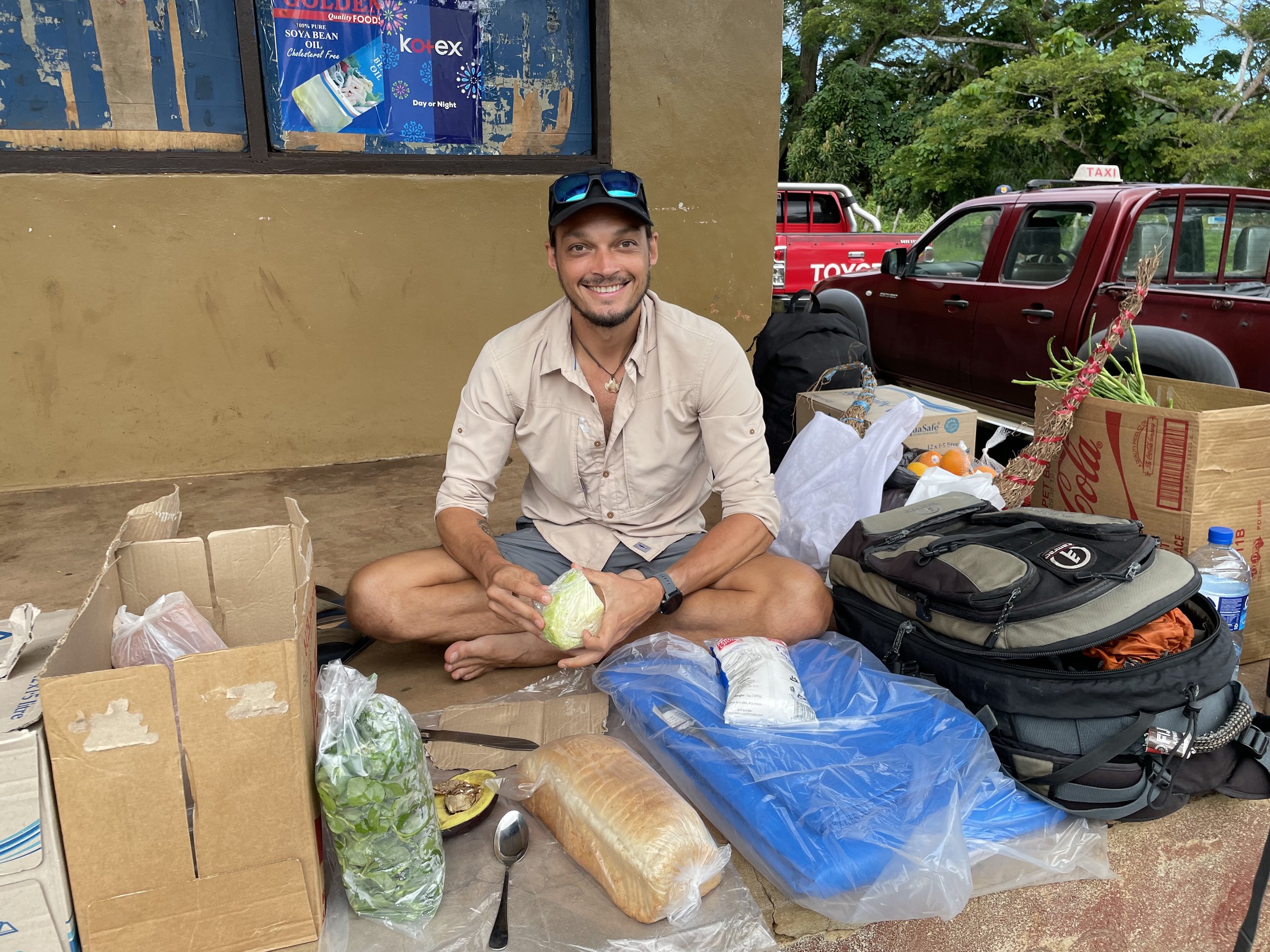
My work is supported through professional-service and equipment partnerships that help me operate reliably in demanding conditions on land and underwater.

HAVE A STORY WORTH TELLING?
If you are planning a conservation, science, development or tourism project in Fiji or elsewhere in the Pacific, I would be glad to hear about it.