
The New Britain Goshawk: How I Photographed a Lost Bird in Papua New Guinea
In March 2024, I found myself in the remote rainforests of Pomio, in East New Britain Province, Papua New Guinea. During an early morning walk with local guides, I photographed a bird of prey perched high in a tree on the opposite side of a valley. At the time, I had no idea how significant those few photographs would turn out to be.
Several weeks later, I learned that I had captured the first known photograph of a living New Britain Goshawk (Tachyspiza princeps), an elusive forest raptor endemic to the island. Although there had been sightings in the intervening years and local communities knew the bird, it had gone without photographic, sound or specimen documentation for 55 years and was listed among the world’s “lost birds.”
What started as a chance encounter eventually led to international media coverage and a scientific publication. This is the story of how it happened.
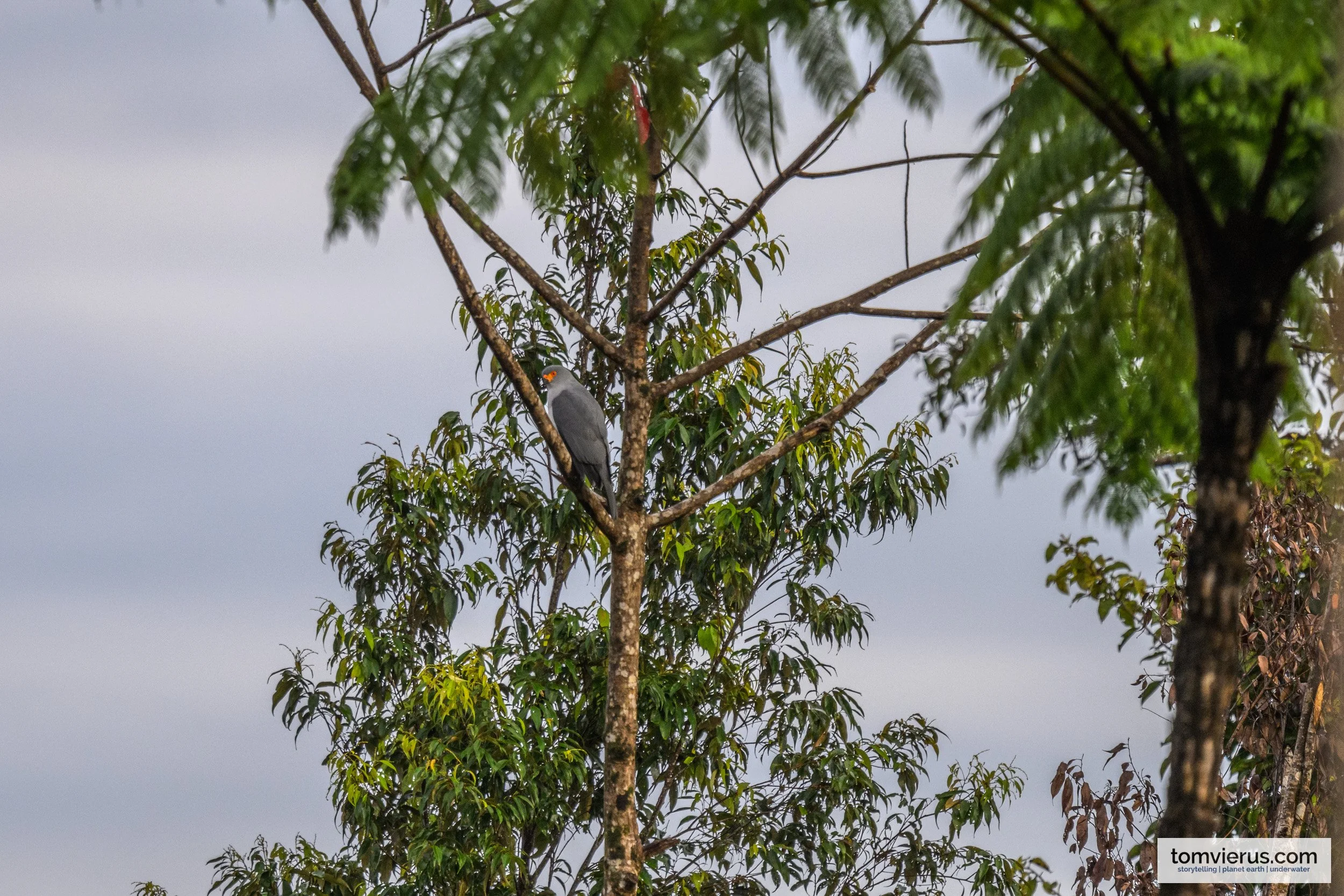
A New Britain Goshawk (Tachyspiza princeps) photographed near Pakia village in Pomio, Papua New Guinea, on 16 March 2024—the first known photograph of the species alive.
Into the Rainforests of New Britain
As part of a scoping mission with WWF-Pacific and WWF-Papua New Guinea, I travelled with a team of experts to Pomio to explore a potential new site for community-based conservation work. The region is home to vast stretches of rainforest, remarkable biodiversity and communities whose lives are closely connected to their natural environment. Getting there is no easy task. The journey begins with a flight to Kokopo in northern New Britain, followed by a 20-hour ferry or 10-hour private boat along the coast to Palmalmal, the main administrative centre of Pomio District. From there, reaching the more remote communities and forests involved further travel by boat, road and on foot.
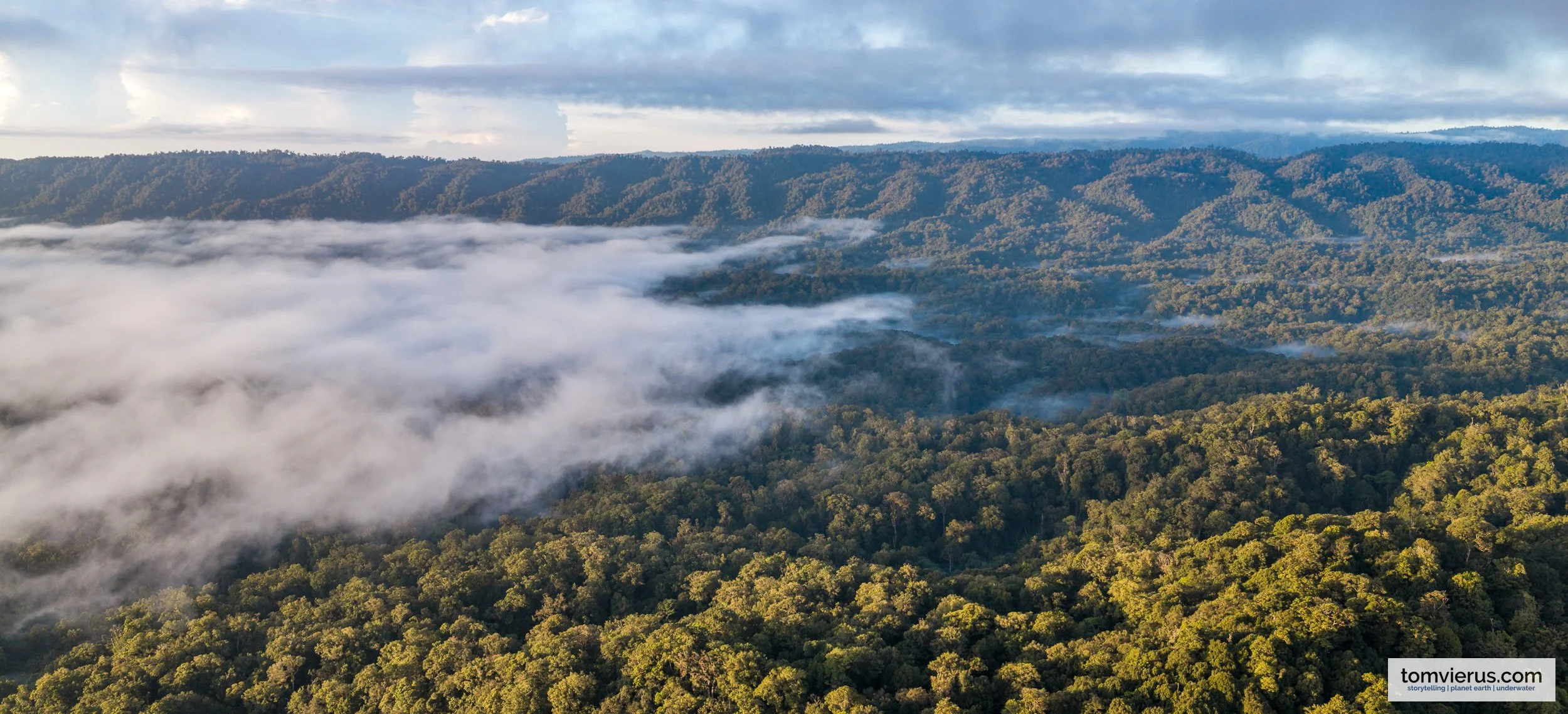
Mist blankets the rainforest of the Nakanai Plateau, seen from near Pakia village in inland Pomio.
The scouting trip meant long days, uncomfortable journeys, steep walks, heat, humidity and plenty of mosquitoes. Fortunately, our team—local participants from New Britain alongside colleagues from Fiji, Europe and Australia—got on well, and there was plenty of laughter along the way. That makes a huge difference on an expedition like this. Personally, I thrive on these trips and the opportunity to document places and stories that few people get to experience.
My role was to photographically document the expedition, the landscapes, wildlife and communities we encountered, while also producing a longer documentary and two short films about Pomio's remarkable natural heritage and why it deserves greater protection.
For more photographs, films and background on WWF's conservation efforts in the region, have a look at my Pomio conservation project.
An Unexpected Encounter
One morning, my alarm rang at 3:30 a.m. The plan was to head deeper into the forest with local hunters to photograph as much wildlife as possible.
We were staying in a mountainous village in the Nakanai Ranges, where the nights were surprisingly cold. When I got up, it was still completely dark, and the rest of the team was sleeping around me. I collected my equipment, which I had more or less prepared the evening before, and headed towards the village porch.
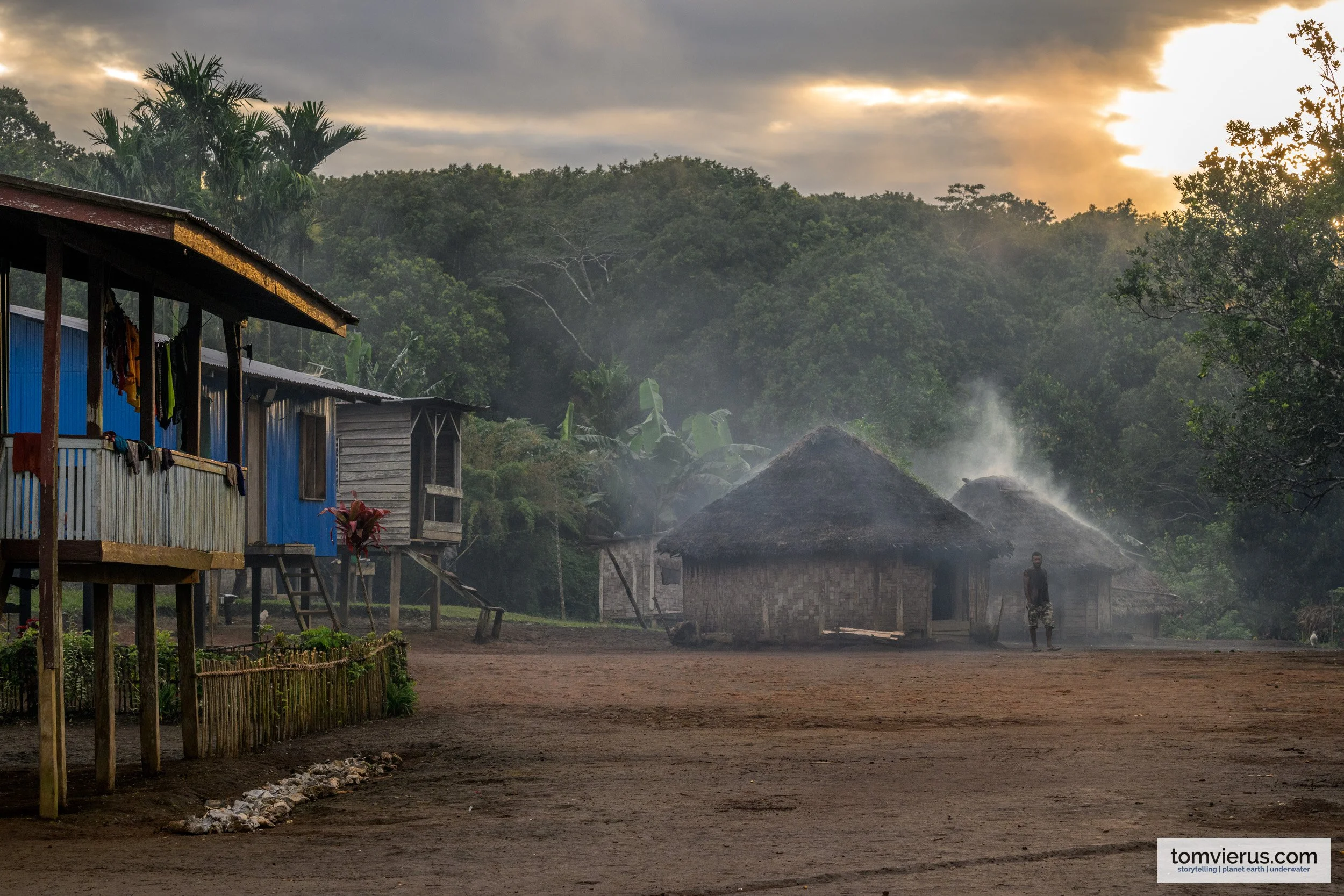
Early morning in Pakia village in the highlands of Pomio, New Britain, Papua New Guinea. Photo: Tom Vierus.
Nobody seemed to be awake yet. I waited for the first signs of daylight and eventually started walking along the village road. A little later, one of the hunters who was supposed to accompany me approached and asked for some patience before disappearing back into the village.
By the time he returned, the sky had turned a beautiful golden colour, and daylight was rapidly approaching. We were now three hunters, two dogs and myself.
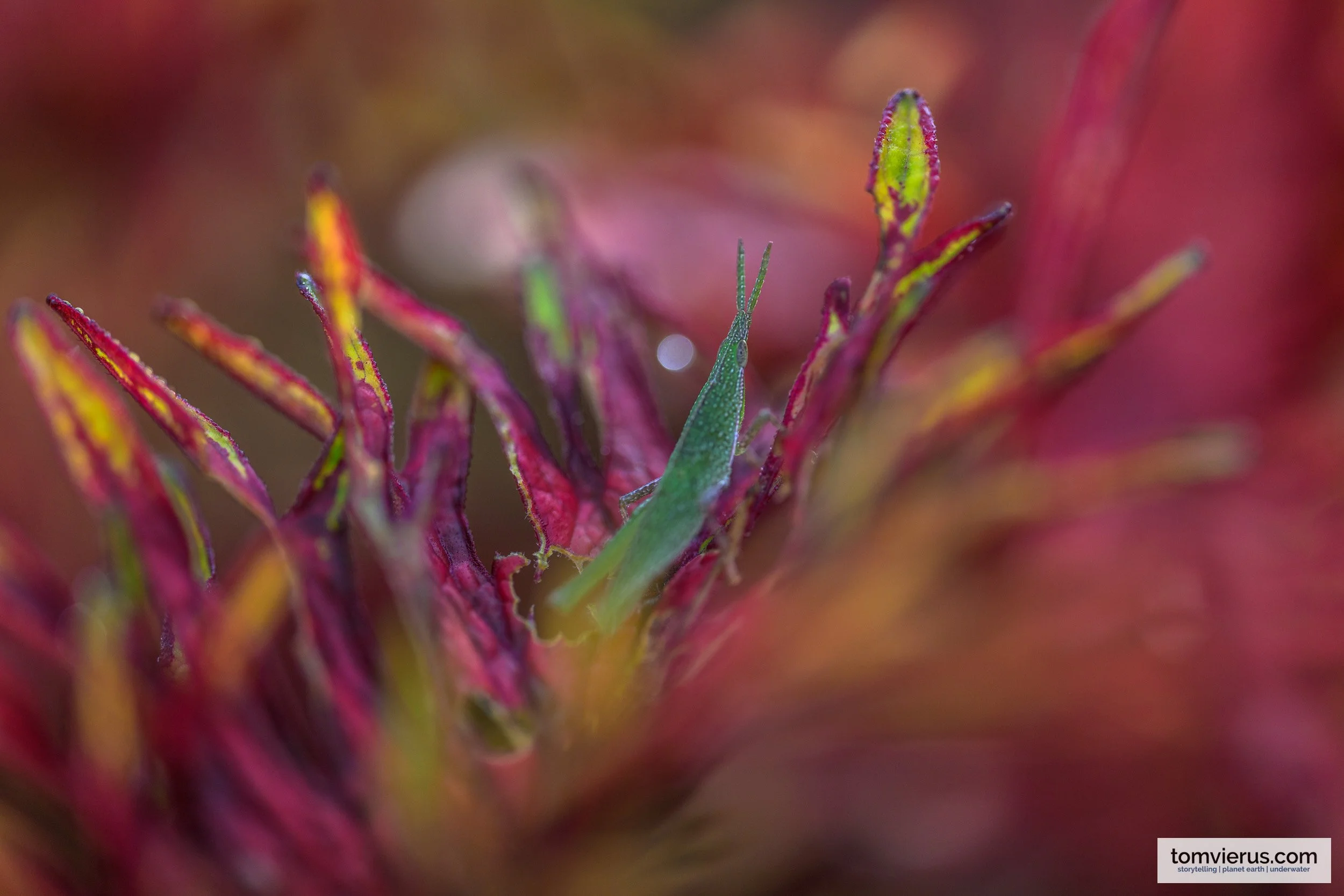
A grasshopper among colourful foliage near Pakia village during our expedition to New Britain.
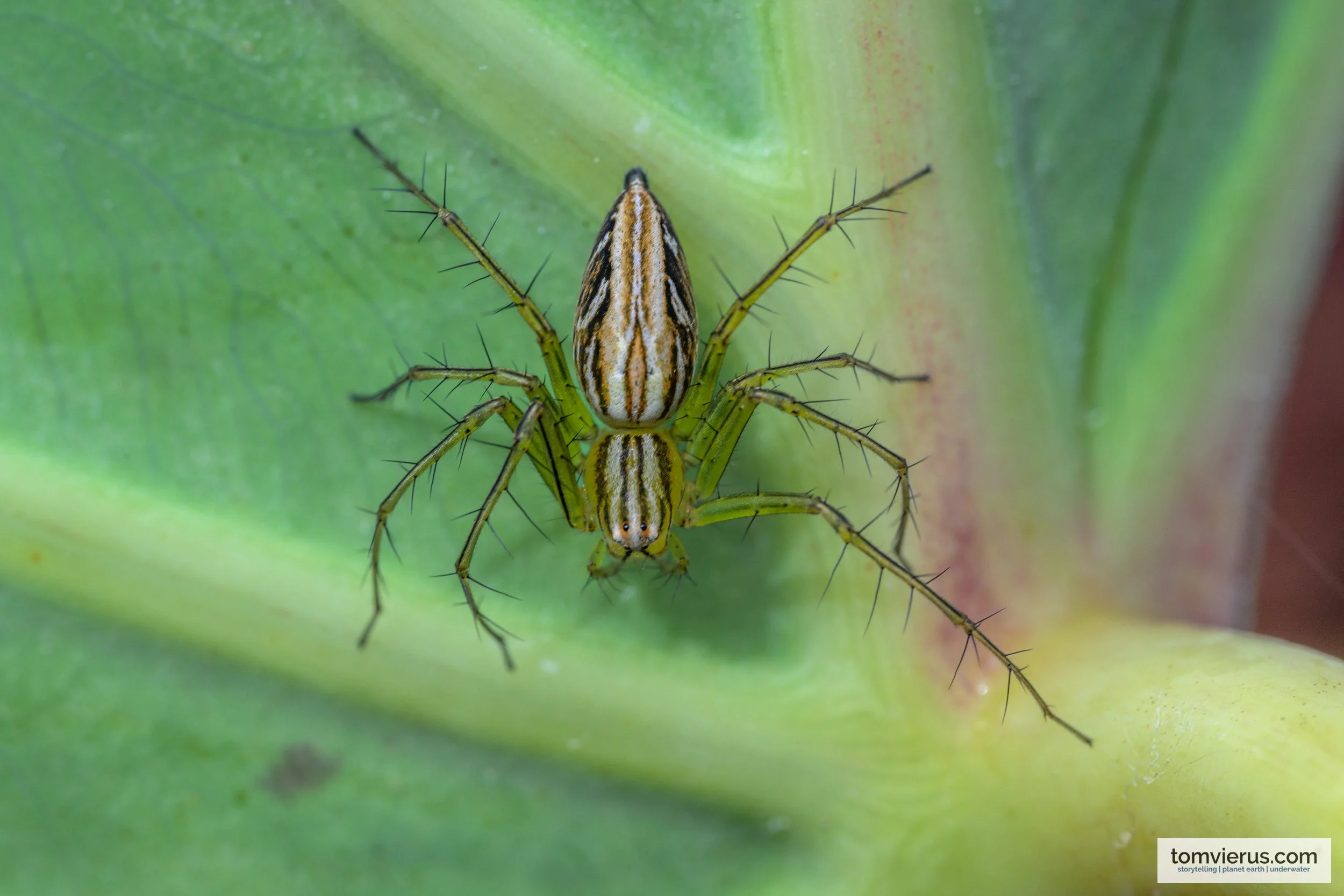
A closer look at New Britain’s smaller wildlife: a spider resting on a leaf during our expedition.
As expected, the hunters moved incredibly fast through the forest and seemed completely unbothered by the steep slopes and slippery conditions. I struggled to keep up while carrying my camera backpack, a Nikon Z camera with an 800mm lens attached, and a second Nikon Z8 fitted with a 14–30mm wide-angle lens.
One of the hunters kindly offered to carry my heavy tripod. In retrospect, I probably could have left it behind, but you never know what opportunities might present themselves in the forest!
Whenever I spotted movement, I stopped to take photographs. It took us a little time to find a rhythm: I was keen to photograph even the birds that were familiar to my guides, while they were moving quickly through the forest. They helped point out wildlife along the way, and I often followed a little behind, stopping whenever something caught my eye.
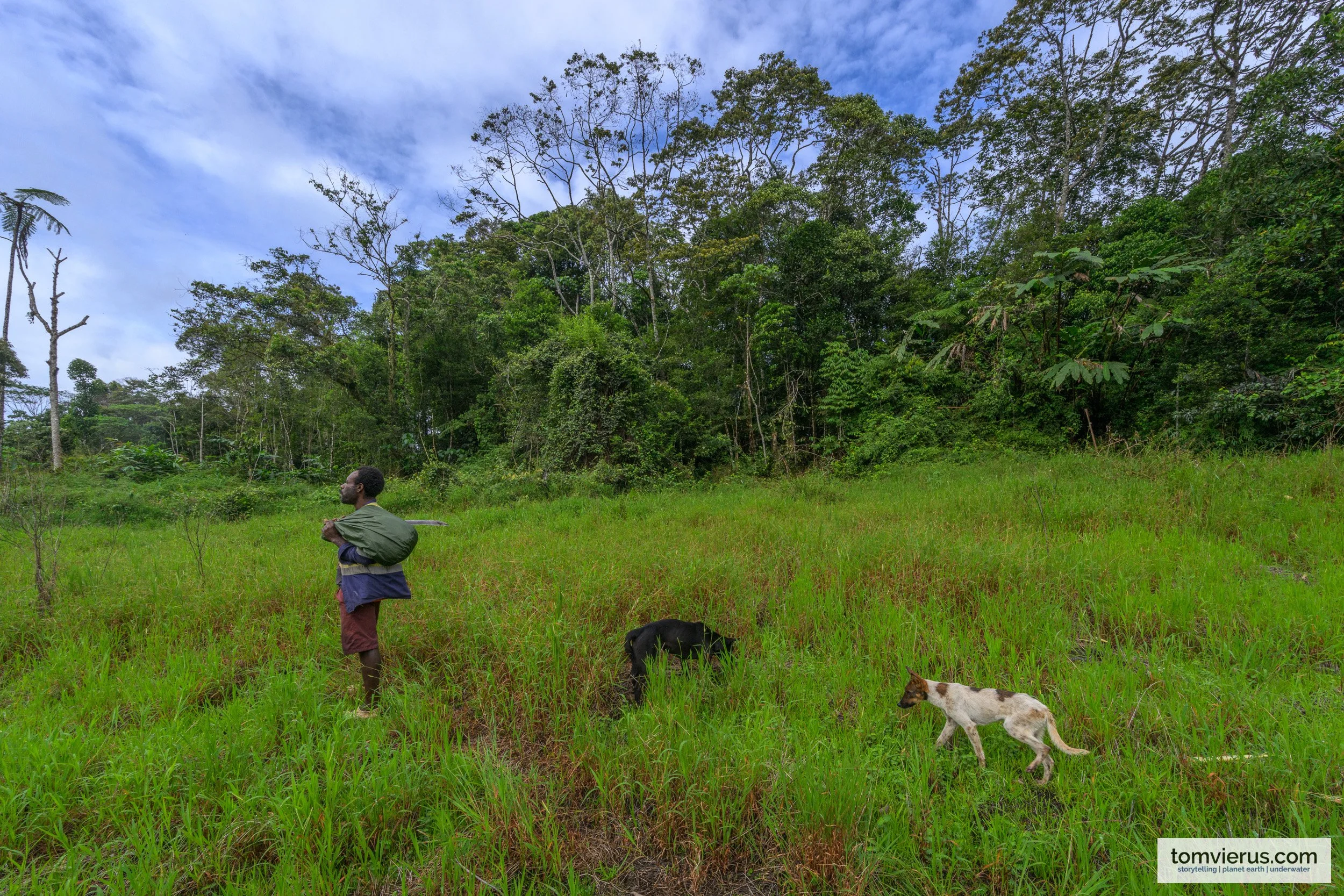
One of the the local hunters and two of the dogs who accompanied me during our expedition in Pomio, New Britain. Photo: Tom Vierus.
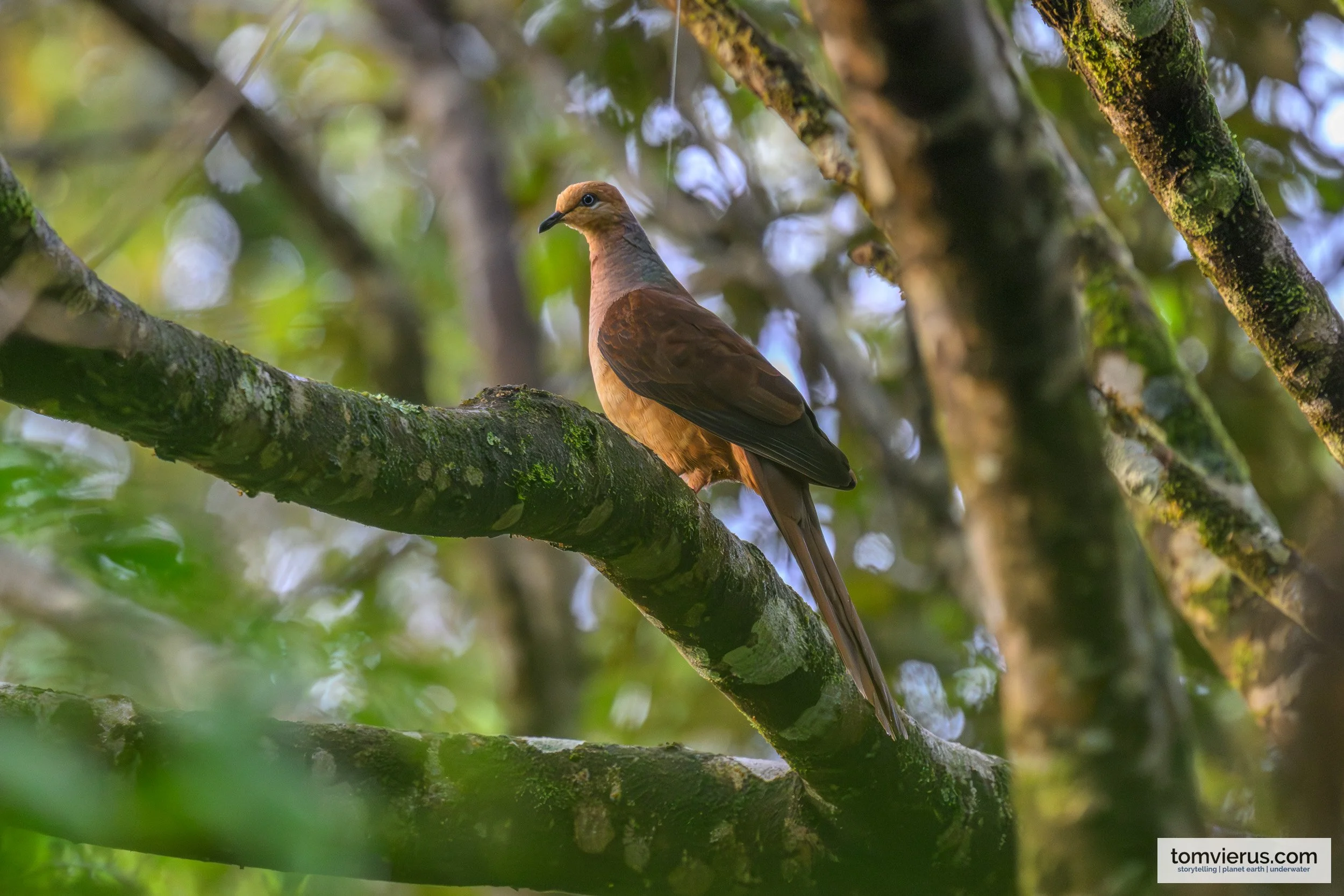
A cuckoo-dove perched in the forest near Pakia village, New Britain. Photo: Tom Vierus.
While I know most of Fiji’s birds quite well, I hadn’t studied New Britain’s species in detail before the expedition. Wildlife photography was only one part of the assignment, so I photographed whatever caught my attention and left many of the identifications for later.
During a short break while climbing a mountainside, I spotted a hawk perched high in a tree across the valley. It was quite far away, but I quickly attached a teleconverter to my 800mm lens and managed to take a few photographs before the bird flew off.
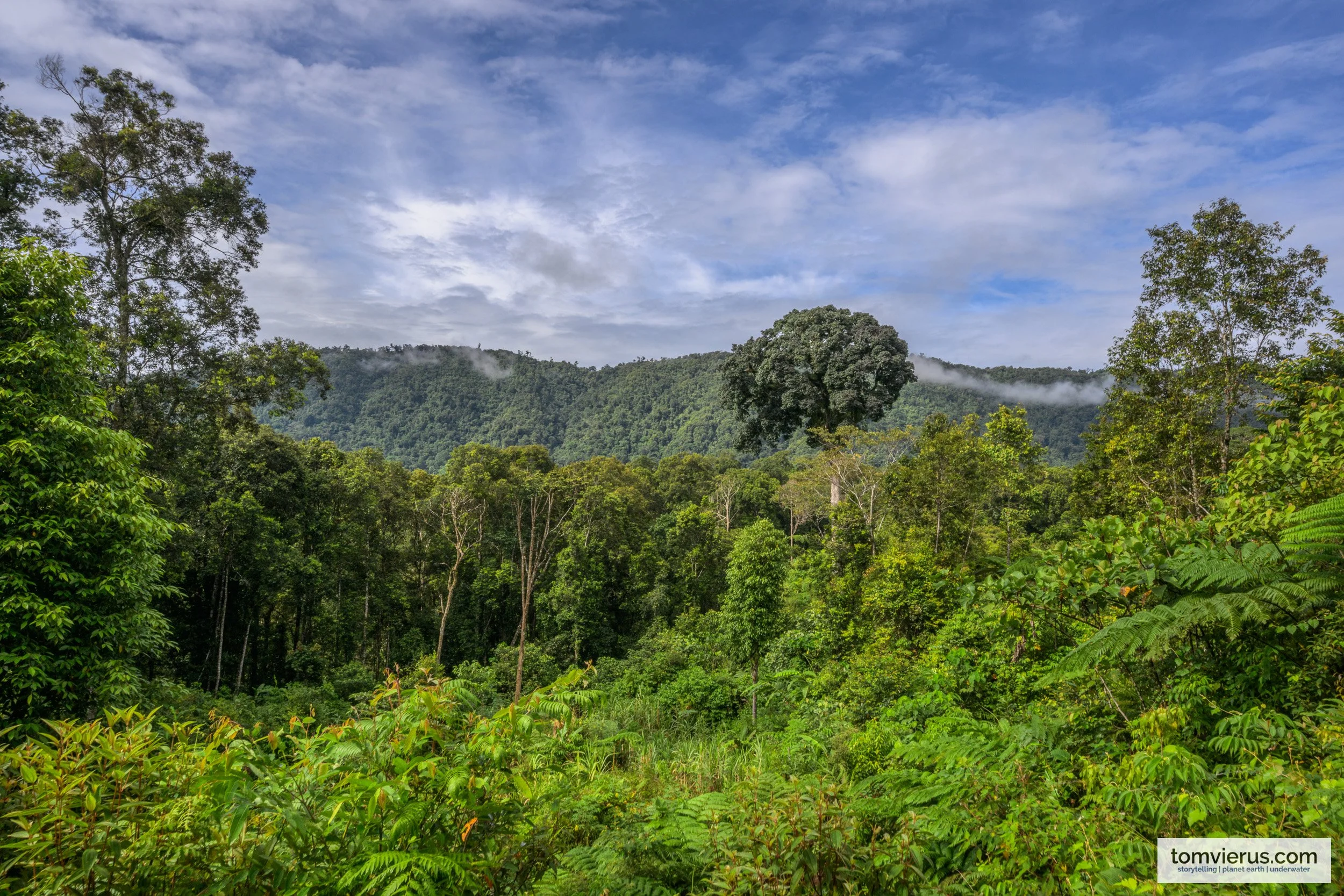
The forest near village clearings where I encountered the New Britain Goshawk. Local villagers told me these birds often hunt around their gardens.
With time pressing, I continued walking just seconds later, scanning the forest for other wildlife.
I had no idea that those few seconds, and the decision to photograph a rather distant bird, would eventually become one of the most remarkable moments of my career as a wildlife photographer.
Discovering the Significance of the Photograph
Back in Fiji, I began working through the enormous amount of material we had collected during the expedition. As usual, this meant sorting through thousands of photographs, hours of video footage and interviews, while trying to turn everything into compelling visual stories.
For several years, I've also been contributing wildlife observations to iNaturalist, a citizen-science platform that I've come to appreciate enormously. Whenever I travel somewhere new, I try to upload interesting wildlife encounters, including photographs that might not be good enough for a professional portfolio but could still be valuable as biodiversity records.
I also regularly contribute bird observations to eBird and share selected images from my travels on my birding page, including a gallery dedicated to Papua New Guinea.
While editing the Pomio photographs in Lightroom, I came across the distant hawk again. I knew that several raptor species occurred on New Britain, but none of the more common ones seemed to fit perfectly. At that stage, I had no idea that the New Britain Goshawk was considered a lost species or how long it had been since its last scientifically documented record.
I uploaded the photograph to iNaturalist alongside a whole range of other wildlife observations and carried on with my work.
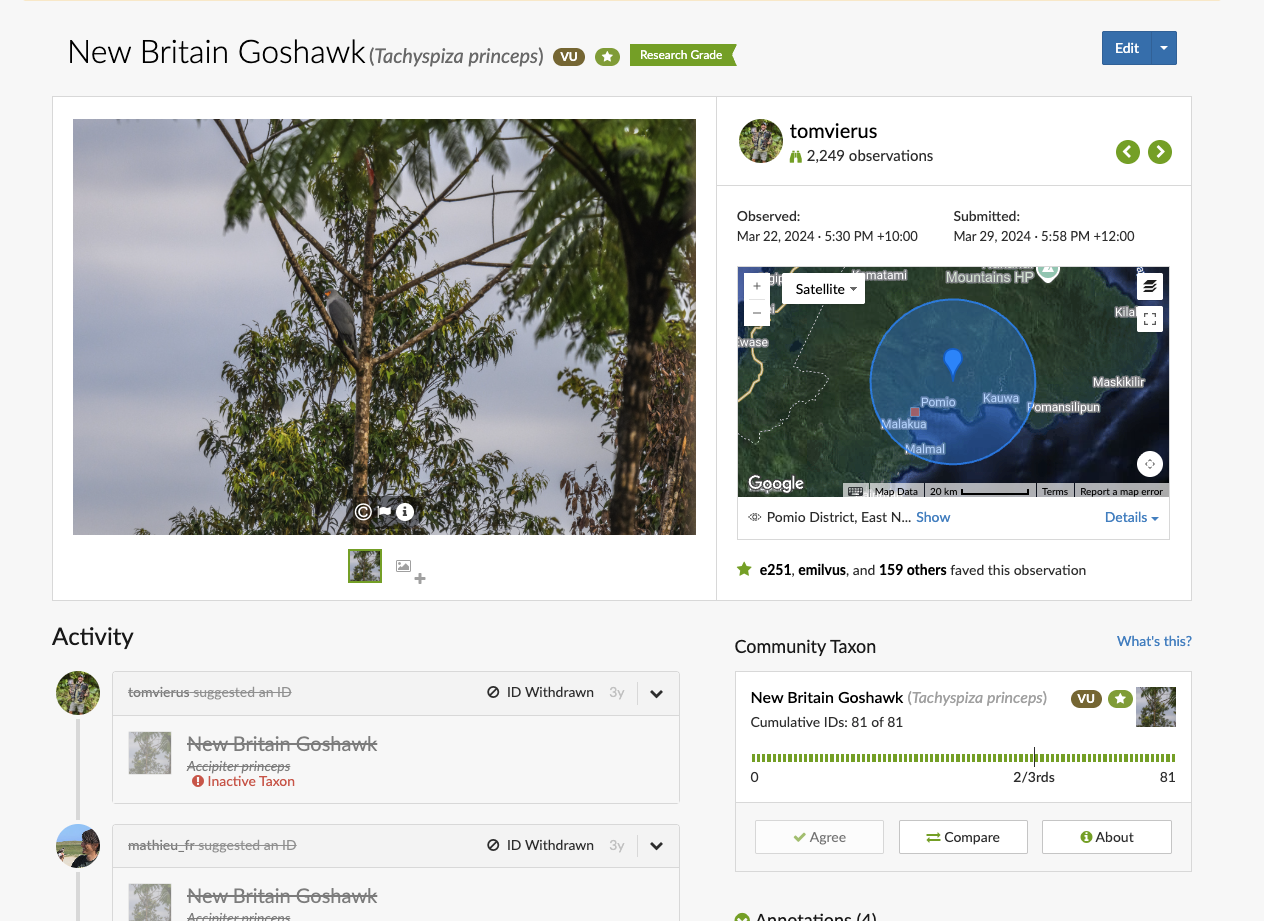
A few days later, I checked back and noticed that several people had commented on the photograph. The bird appeared to be a New Britain Goshawk, and the significance of the observation was beginning to emerge.
What I had considered a fairly ordinary photograph of a distant raptor was potentially the first known photograph ever taken of the species alive.
That was quite a surprise!
The observation attracted further attention, and with the help of the iNaturalist community and ornithologists familiar with the region's birds, the identification was confirmed.
You can see the original iNaturalist observation and identification discussion here.
-
Scientific name: Tachyspiza princeps
Distribution: Endemic to New Britain, Papua New Guinea
Conservation status: Vulnerable (IUCN)
Length: 38–45 cm
Wingspan: 75–86 cm
Habitat: Primarily hill and montane rainforest
Threats: Habitat loss from logging, agriculture and other land-use changes
The New Britain Goshawk is a rarely documented forest raptor found nowhere else on Earth. Adults have predominantly grey upperparts, white underparts and striking orange-red eyes, with bright orange-yellow facial skin.
The species had not been formally documented since a specimen was collected in 1969, although there had been subsequent sightings that lacked photographic confirmation. Very little is known about its population, behaviour and ecology, making every reliable observation valuable.
Importantly, the bird was not necessarily "lost" to the people living in its habitat. Local communities in Pomio knew of the goshawk, referring to it as keango or kulingapa, and described it as a rare bird of the inland forests.
The species is listed as Vulnerable, with habitat loss representing a significant threat to its future.
From a Chance Encounter to a Scientific Publication
As the significance of the photograph became clearer, I contacted WWF to share the news. More messages and emails followed, and what had started as a quick photograph during a forest walk became a much bigger story.
Things soon started moving.
In September 2024, WWF published an official press release announcing the first known photograph of the New Britain Goshawk. The story was picked up by news outlets around the world, including in the United States, India, China and Europe.
It was incredible to see a single wildlife photograph from a remote forest in Papua New Guinea receiving so much international attention.
You can read the official WWF press release here.
I also got in touch with John Mittermeier from the American Bird Conservancy, who directs the Search for Lost Birds programme. The initiative works to document bird species that have gone without reliable scientific records for many years, helping establish whether they still survive and drawing attention to their conservation needs.
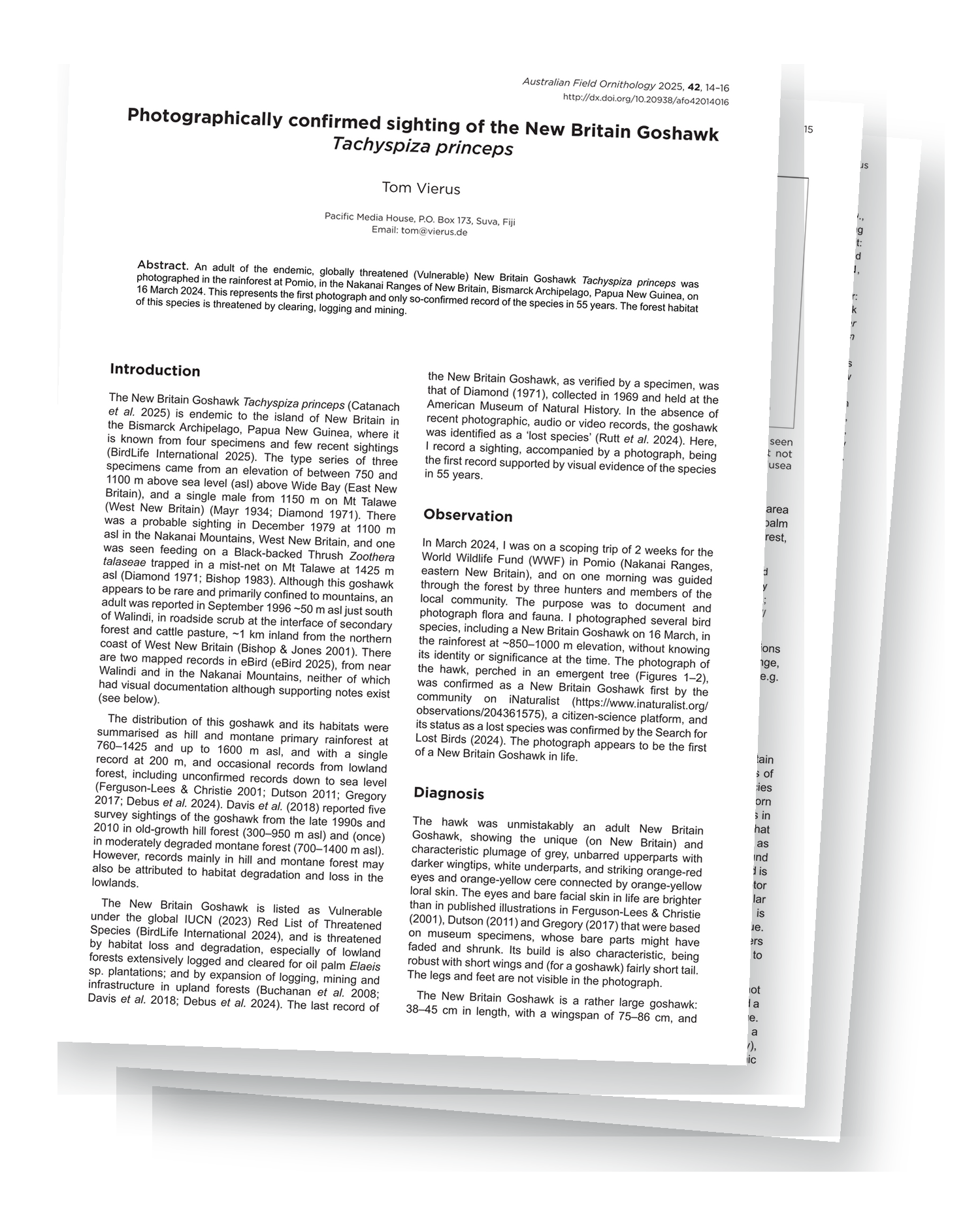
Our correspondence, alongside the identification and supporting evidence, reinforced the importance of placing the observation on the scientific record. I subsequently wrote a short scientific paper documenting the sighting, including the circumstances of the encounter, the bird's identification and its significance in relation to previous records.
The paper, titled Photographically confirmed sighting of the New Britain Goshawk Tachyspiza princeps, was published in March 2025 in the peer-reviewed journal Australian Field Ornithology.
The photograph provided the first visually confirmed record of the species in 55 years and new information about its appearance in life, particularly the striking colouration of its eyes and facial skin.
You can read the scientific publication here.
Why This Discovery Matters
What I find particularly remarkable about this whole story is how easily the photograph could have been overlooked.
The bird was far away, the light wasn't ideal, and the encounter lasted only a few seconds. From a purely photographic perspective, it certainly wasn't among the strongest images I had taken during the expedition.
Had I decided not to photograph it, or simply deleted the image because it wasn't good enough for my portfolio, the observation might never have been documented.
Instead, thanks to a combination of chance, curiosity, citizen science and the knowledge of the people who helped identify the bird, a rather unremarkable photograph became a valuable scientific record.
The discovery also illustrates the importance of local knowledge. While the goshawk had been considered lost to science, people living in Pomio's forests were familiar with the bird and its presence in the region. Bringing together local observations, field photography and scientific expertise can help build a more complete understanding of species that remain poorly studied.
For me, it was another reminder of why I love working in remote places and documenting biodiversity, even when wildlife isn't the main focus of an assignment.
There is still so much we don't know about the species that inhabit our planet, particularly in places as biologically rich and relatively understudied as New Britain. At the same time, many of these ecosystems face increasing pressure from logging, agriculture and other forms of development.
Hopefully, the attention surrounding the New Britain Goshawk will also help draw attention to the extraordinary forests of Pomio and the importance of protecting them together with the communities who depend on them.
And perhaps my biggest personal takeaway from this experience is a simple one: keep observing, keep documenting and share your findings. You never quite know what might turn out to be significant.
Sometimes, even a distant photograph taken in a matter of seconds can make a lasting contribution to science.
My thanks to the communities of Pomio and the local guides who shared their knowledge and led us through these forests, to WWF-Pacific and WWF-Papua New Guinea for facilitating the expedition, and to WWF-Belgium for funding it. I’m also grateful to the iNaturalist community and the ornithologists who helped identify the bird and establish the significance of the observation.
Since my encounter, another photographic record has added to our knowledge of this little-known bird. In February 2026, Thierry and Marianne Quelennec published the first description and photographs of the New Britain Goshawk’s juvenile plumage, following an encounter in the Whiteman Range in September 2025. It’s encouraging to see further observations helping build a fuller picture of the species. Read the 2026 paper on the New Britain Goshawk’s juvenile plumage.
